

Mercury is no spring chicken in cosmic terms, and it shows. The 4.5 billion-year-old planet is shrinking as its interior cools, a process that produces wrinkle-like features called shortening structures all over the surface. For decades, planetary scientists have used these signs of aging to calculate how much Mercury has contracted throughout its lifetime, giving us a deep-history perspective on the first rock from the sun.
But a new study reveals that Mercury’s telltale wrinkles are more widespread than previous estimates recognized — they’re just difficult to spot beneath impact craters and debris from billions of years of asteroid bombardment. This discovery suggests that the planet may have shrunk 10 to 30 percent more than experts thought, according to a new study in Geophysical Research Letters.
“Many fingerprints of Mercury’s […] have been obscured,” Gaku Nishiyama, a planetary scientist at the German Aerospace Center’s Institute of Space Research and lead author of the new paper, told Discover.
Read More: Scorching Hot Volcanoes Sculpted Mercury's Crust Before Shutting Down 3.5 Billion Years Ago
What Hides On Mercury’s Surface?
Mercury, like Earth, has a fiery inner core that’s been losing heat ever since it formed. As the interior dissipates thermal energy, its atoms slow down and draw closer together, causing it to contract. To compensate, the planet’s brittle crust buckles into ridges and scarps. These tectonic landforms are common on the surface of all rocky planets and moons.

 Explore All Options
To quantify how much Mercury’s violent history hides the true extent of those landforms, and thus of its shrinkage, Nishiyama’s team created a map of the planet’s surface roughness. They found that shortening structures are less common in rough terrain, indicating that many wrinkles have been obscured by “resurfacing events” like asteroid impacts.
The prevalence of such wrinkles has been used to estimate Mercury’s contraction in the past. In a 2014 Nature Geoscience paper, Paul Byrne, a planetary scientist at Washington University, and his colleagues concluded that the planet’s diameter had shrunk by as much as 9 miles, far more than older estimates. Now Nishiyama’s work revises that figure upward yet again, to more than 14 miles.
Already the smallest planet in our solar system, Mercury is diminishing at a rate Nishiyama finds surprising. Though his reasoning made intuitive sense — obviously disruptions to the planet’s surface would mask underlying landforms — he didn’t anticipate such a dramatic effect.
“I was expecting some correlations” between surface roughness and missing wrinkles, Nishiyama said, “but I was not expecting such a very clear correlation.”
Understanding Mercury’s Core and Why It Is Cooling
The researchers argue that their calculation may still underestimate the effect; they consider it a lower bound rather than the final word. Because Mercury’s tectonic record is so sketchy, it’s likely the new map of surface roughness still fails to capture all the details needed for an accurate measurement.
“Mercury's […] contraction is a long-standing mystery,” Nishiyama said, and this study doesn’t fully eliminate the uncertainties.
That said, it does point to new possibilities. The amount of shrinkage is a crucial clue to the makeup and evolution of Mercury’s interior. Nishiyama said his team’s findings suggest that the core started out extremely hot, and that it’s composed predominantly of metal, with fewer light elements like silicon.
“This is still an ongoing topic,” he added, “because disentangling the many parameters of Mercury’s interior is not easy.”
This research also has implications for our understanding of other celestial bodies. If surface roughness has skewed previous estimates of Mercury’s contraction, the same is probably also true of rocky worlds in general, including Mars, the moon, and exoplanets across the Milky Way.
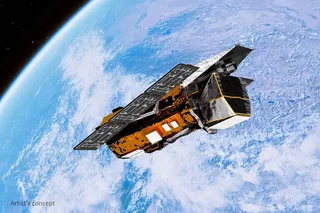
Nishiyama noted that the BepiColombo Laser Altimeter, or BELA, launched by the European Space Agency in October 2018, is finally nearing Mercury’s surface after eight years. The mission will allow researchers to measure surface topography more precisely, giving us a clearer picture of the planet’s inner workings and, by extension, those of similar planetary bodies everywhere.
Read More: Bright Streaks on Mercury Suggest That It's Not a Dead Planet, but Geologically Active
Article Sources
Our writers at Discovermagazine.com use peer-reviewed studies and high-quality sources for our articles, and our editors review for scientific accuracy and editorial standards. Review the sources used below for this article:
- This article references information from a study published in Geophysical Research Letters: Underestimation of Planetary Contraction Due To Obscuration by Surface Roughness: The Case of Mercury
- This article references information from NASA: Mercury Facts
- This article references information from a study published in Nature Geoscience: Mercury’s global contraction much greater than earlier estimates
- This article references information from the ESA: BELA