Shapeshifting werewolves are only part of haunting folklore, but the supernatural creature also serves as the namesake of a small rodent that roams the nocturnal deserts of northwestern America.
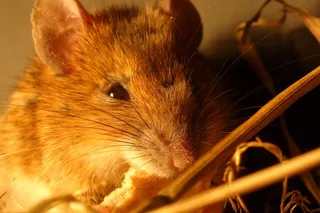
The werewolf mouse, also called the grasshopper mouse, is different than other mice. The unassuming mouse has quite the reputation, defeating venomous scorpions, centipedes, and even hunting other mice, and is therefore renowned as a small analogue to larger carnivores with similarly fierce behavior.
The grasshopper mouse even copies the most distinct feature of a wolf — the howl. It might not scare humans, but among the highly territorial and aggressive rodents, howling is a trademark to announce its presence in the dark deserts it calls home.
The Werewolf Mouse Howls at the Moon
The inconspicuous grasshopper mouse carries quite the impressive and unique set of superpowers under its belt. Since the small rodent shares its home with the most venomous creatures of northwestern America, the grasshopper mouse evolved many adaptations to live alongside them, as described by the BBC.
For instance, under the cover of night, the perfect time for hunting its prey, the grasshopper mouse disarms one of its favorite snacks — the venomous bark scorpion. Alongside their specialized set of teeth, tailored to the grasshopper mouse’s predominantly carnivorous diet, the mouse has not only developed immunity to the scorpion’s venom but also can convert the toxin into a temporary painkiller.

 Explore All Options
But the most eerie feature of the grasshopper mouse is possibly its 9 to 14 kHz howl. Theorized to be for communication with other mice, the small rodent rears on its hind legs, throws its head in the air, and howls, which, when played at a slower speed, sounds just like that of a wolf, giving it its nickname of the werewolf mouse, according to Nevada’s Department of Wildlife.
Read More: Rare 'Vegan Dracula' Lamprey Appears 870 Miles Beyond Its Known Range
A Unique Mouse That Thrives in the Deserts of Northwestern America
The werewolf mouse holds a unique status among other mice. In contrast to their many cousins, the werewolf mouse rarely consumes seeds and plants, and instead prefers a mostly carnivorous diet, including many insects, like grasshoppers, beetles, crickets, and scorpions, as well as other small vertebrates, such as kangaroo rats, white-footed mice, and voles, as noted by Britannica.
The werewolf mouse is not just one, but three distinct species. The northern grasshopper mouse (Onychomys leucogaster) inhabits grassland and steppes from Canada through the Great Plains, all the way to northern Mexico. The southern grasshopper mouse’s (O. torridus) habitat stretches from southern California, Nevada, and Utah to northeastern Mexico. Last but not least, Mearns’ grasshopper mouse (O. arenicola) can be found all the way down to central Mexico.
Generally, most grasshopper mice prefer arid and scrubby desert environments, where the 1.7-ounce and 5-inches long rodent spend their two to five years of lifespan. The werewolf mouse can be recognized by its silky gray to reddish-brown upper coat and a white undercoat.
The Werewolf Mice Retreat in Burrows When the Sun Rises
Overall, grasshopper mouse populations are relatively small, as raising werewolf mouse pups takes unusually long, since they need to learn their unique predatory behaviors to survive the rough desert habitat. Additionally, werewolf mice are described as highly aggressive and territorial. Together, these behavioral traits and the mice’s specialized hunting skills are surprisingly similar to larger mammalian carnivores.
As much as the werewolf mouse thrives during the night, with the rising sun the little nocturnal rodent retires in abandoned burrows of other mammals and rodents, like prairie dogs and pocket mice, or builds its own den for nesting and food storage to escape the soaring desert sun until the dusk falls again.
Read More: These Vampire Deer Have Three-Inch Fangs Instead of Antlers to Fend Off Rivals
Article Sources
Our writers at Discovermagazine.com use peer-reviewed studies and high-quality sources for our articles, and our editors review for scientific accuracy and editorial standards. Review the sources used below for this article:
- This article references information from the BBC: Grasshopper mouse
- This article references information from Nevada’s Department of Wildlife: Northern Grasshopper Mouse
- This article references information from Britannica: grasshopper mouse