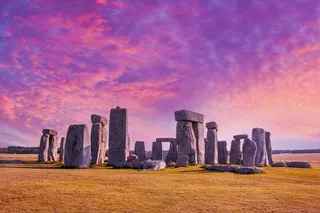


Merlin’s Mound — or Marlborough Mound, to use its official name — is an artificial hill in Wiltshire, England, that dates back to the Late Neolithic, making it a contemporary of the more famous Stonehenge.
Over the years, it has served as a Norman motte, a royal castle, and a garden curiosity. Today, it’s nestled in the grounds of an English public school, but much around the site remains a mystery.
In an effort to learn more about the origins and history of Marlborough Mound, archaeologists in association with The Marlborough Mound Trust and Marlborough College are launching an archaeological investigation, which will include the removal of three 20th-century structures. Though originally due to take place in 2026, work has been delayed until 2027.
While we might have to wait a little longer for the conclusions of that work to be announced, this is what we know about the mound so far.
What Is Marlborough Mound?

(Image Courtesy of Marlborough Photos)
Standing at 62 feet (19 meters), it is the second-largest Neolithic mound in Britain and possibly in Europe, according to Marlborough College. It is only dwarfed by Silbury Hill, which lies just 5 miles down the road and is over 98 feet (30 meters) tall, according to English Heritage.

 Explore All Options
According to the trust, many believed Marlborough Mound was Norman in origin, which would have made it roughly 1,000 years old. However, radiocarbon dating results published in a 2013 study in the Proceedings of the Prehistoric Society show it is significantly older.
Researchers now think that Neolithic settlers built the original mound around 2,400 B.C.E., a time when Britain was transitioning from the Stone Age to the Bronze Age. This makes it as old as Sidbury Hill and Stonehenge, as well as a third, smaller mound ten miles to its south.
Read More: Neolithic Farmers Were Cultivating Bread Wheat in Georgia 8,000 Years Ago
How Did It Get Its Nickname, Merlin’s Mound?
Adding to its mystery is its nickname, “Merlin’s Mound.” According to myth, it is the burial place of the prophet and sorcerer Merlin, a key figure of Arthurian legend. This is even referenced in Marlborough’s town slogan: “Ubi nunc sapientis ossa Merlini,” which translates to “Where now lie the bones of wise Merlin.”
The legends stem from early Medieval Celtic oral traditions and poetry. In these stories, Merlin was the advisor and mentor of King Arthur, who was said to have defended Britain against the Saxons.
The Purpose of Marlborough Mound
Archaeologists know relatively little about the purpose and origin of Marlborough’s Mound, but it does appear to exist within a larger cluster of Neolithic structures. The nearby Silbury Hill sits within the Avebury World Heritage Site, which includes the largest prehistoric stone circle in the world, along with several other Neolithic tombs and monuments.
According to the trust, structures such as these may have played a role in religious and political practices.
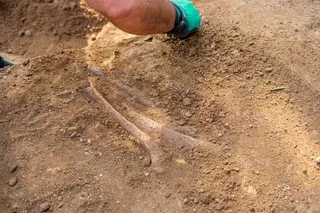
Neolithic artifacts, including pottery and flint tools, have also been discovered at sites nearby, as have animal bones and human remains. It is thought that the people living in the area lived in small settlements, raising livestock and farming crops such as barley.
Marlborough’s Mound Through The Millennia
Merlin’s Mound has gone through various iterations and transformations over the years. The Normans turned the mound into a motte before it was destroyed and rebuilt as a royal castle under Henry III. For the next three centuries, it belonged to the queens of England — including all six of Henry VIII’s wives, according to the trust.
Then, in the eighteenth century, it was incorporated into the gardens of Marlborough House, becoming a trendy garden feature complete with a shell grotto. The house later became the Castle Inn, entertaining travelers on the road from Bath to London, before becoming a school, which it remains to this day.
Read More: Neolithic Humans, Not Glaciers, Likely Transported Stonehenge’s Altar Stone Over 400 Miles
Article Sources
Our writers at Discovermagazine.com use peer-reviewed studies and high-quality sources for our articles, and our editors review for scientific accuracy and editorial standards. Review the sources used below for this article:
- This article references information from The Marlborough Mound Trust
- This article references information from Marlborough College: The Marlborough Mound
- This article references information from The Marlborough Mound Trust: Prehistoric Mound
- This article references information from English Heritage: Description of Silbury Hill
- This article references information from The Marlborough Mound Trust: Marlborough in the Neolithic
- This article references information from Proceedings of the Prehistoric Society: The Marlborough Mound, Wiltshire. A Further Neolithic Monumental Mound by the River Kennet
- This article references information from English Heritage: The Avebury World Heritage Site