Old records and local traditions said a saint named Mo Luóc founded an important monastery on the Scottish Island of Lismore, but archaeologists had found very little to show it. In 2016, members of the island’s historical society set out to find it.
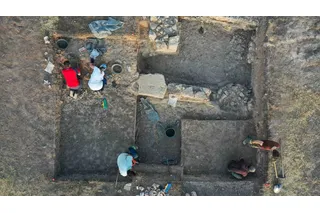
Several years of digging, reported in the journal Antiquity, turned up an early medieval graveyard, the remains of buildings, and a workshop where metalworkers cast brooches and other objects, with a few crucibles (small pots used to melt metal) showing traces of gold and silver. According to the team, led by Clare Ellis of Argyll Archaeology, the find suggests the monastery, known as Lios Mòr, was a wealthy and influential center, active from at least the seventh century.
“We can now see that it was a thriving [center] of worship, craftsmanship and learning, whose importance may have [rivaled] some of the best-known monasteries in early medieval Britain”, senior author Gordon Noble said in a press release.
Forgotten Early Medieval Graveyard Confirmed on Lismore
The search began at the island's 13th-century cathedral. The aim was to find out whether it stood on the site of the saint’s early monastery, and how big and important that settlement had been.
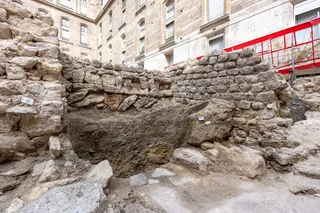
In 2018, the team confirmed a forgotten lower graveyard that appeared only on an 18th-century plan of the church land. Human bones had been dug up nearby in the 1980s, when a church house was built.

 Explore All Options
Radiocarbon dates from the first trench ran from about A.D. 650 to 1040. Another trench, around a broken granite cross known as the sanctuary stone, held infants, teenagers, and adults. Two pairs of infants appear to have each been buried in a single grave, and in one pair, the legs of one lay across the head of the other.
An initial assessment suggests the adults there were all men with worn joints, and a few of the children showed signs of infection or illness. One thigh bone showed a wound that may have come from a sword or axe.
Ellis said the monastery was known from records, place-names, and tradition, but there was "very little archaeological evidence to confirm its character, extent, or significance." The finds strengthen the case that the later church stands on the saint's monastery.
A Workshop Full of Brooch Molds
Beside an oval stone building about 26 feet across, the team found more than 1,000 fragments of metalworking debris, including crucibles, crucible lids, and molds for at least two kinds of brooch. In Scotland, only Dunadd in Argyll has produced a larger collection of molds and crucibles.
X-ray analysis showed mostly copper alloys, but a few crucibles showed silver and gold, which the authors call a rare sign of precious metals being cast. The craftworking layers date to the seventh to ninth centuries.
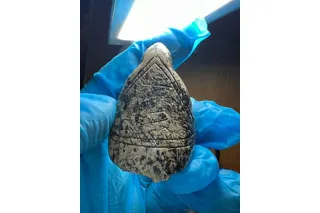
Alongside the metalwork lay bone and antler pieces carved with knotwork, which could have been used to practice metalwork designs.
Why Lismore May Have Rivaled Iona
Iona, the island monastery founded by Saint Columba around A.D. 563, gets most of the credit for early Christianity in western Scotland. Its fame may have overshadowed other churches in the kingdom of Dál Riata, a western realm across Argyll and much of the Hebrides that Scotland's later kings traced their origins to, because the written sources of the time focus on Iona.
Lismore sits where Loch Linnhe meets the sea, on a major route into the Highlands, and a minister writing in 1845 called it "like a garden in a desert."
The team has not yet confirmed the monastery's boundary wall or earliest church, and nothing found so far dates to the sixth century, when Mo Luóc is said to have founded it. The graveyard around the parish church has yet to be dug and probably holds more early burials.
Grants and a crowdfunding appeal paid for the work. Bob Hay, a former islander who organized the funding and volunteers, said: "Local volunteers and the Lismore Historical Society played a central role."
Read More: 2,000-Year-Old Roman Kitchen Unearthed in Spain Reveals Ancient Daily Life
Article Sources
Our writers at Discovermagazine.com use peer-reviewed studies and high-quality sources for our articles, and our editors review for scientific accuracy and editorial standards. Review the sources used below for this article:
- This article references information from a study published in Antiquity: A major monastic centre? Rethinking Lismore’s place in the ecclesiastical landscapes of early medieval Britain