

Sleep is a very fickle thing. Sometimes, you can log a full eight hours of sleep and still wake up groggy. Other times, you sleep much less and feel surprisingly refreshed. A new study suggests this difference may come down to one overlooked factor: how vividly you dream.
Researchers have found that people report deeper, more restorative sleep after immersive dreaming, even when their brain activity doesn’t match what scientists traditionally define as “deep sleep.” The findings, published in PLOS Biology, challenge long-standing assumptions about what actually makes sleep feel restorative.
Instead of slow brain waves alone determining sleep quality, the research points to dreaming as a powerful contributor to how rested we feel.
“We already know that dreaming extends beyond REM sleep and occupies a large portion of the night, yet its function remains unclear. Our study suggests that dreams may help shape how we experience sleep by immersing us in an internal world that keeps us disconnected from the external environment,” the study’s authors said in a press release.
Read More: Pink Noise Is Meant to Help You Sleep, But May Keep Your Brain Awake Instead
A Surprising Link Between Dreams and Sleep Quality
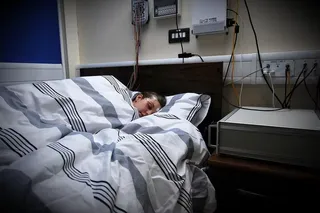
To investigate how dreaming shapes sleep perception, researchers monitored 44 adults over four nights using EEG recordings. Participants were repeatedly awakened during non-REM sleep and asked to report their mental experiences just before waking.

 Explore All Options
The results confirmed part of what sleep science has long believed — transitions from faster, higher-frequency brain waves to slower ones were associated with a stronger sense of deep sleep. But there were unexpected results, as well.
When participants reported dreaming, even if they couldn’t recall specific details, the relationship between sleep and brain waves began to shift. Dreaming appeared to override the usual signals of sleep depth.
When it came to types of dreaming, the most immersive dreams had the strongest effect. Vivid, bizarre, and emotionally intense dreams were linked to a greater subjective sense of deep sleep. By contrast, more abstract or reflective thoughts were associated with lighter, less satisfying sleep.
“Understanding how dreams contribute to the feeling of deep sleep opens new perspectives on sleep health and mental well-being,” said the study authors. “Alterations in dreaming — for example, a reduction in the richness or frequency of dreams — could influence how people perceive their sleep depth or duration, and may contribute to dissatisfaction with sleep quality.”
How This Challenges What We Knew About Sleep
For decades, sleep quality has been tied closely to slow-wave activity, the hallmark of deep, non-REM sleep. This stage has been considered the gold standard for physical and mental restoration.
The new study complicates this picture because dreaming, especially when it feels immersive, is typically linked to more wake-like brain activity — not the slow waves associated with deep sleep. Yet, in the study, participants still reported feeling like they had slept more deeply after these dreaming experiences.
That contradiction suggests sleep isn’t just a biological process measured by brain waves, but is also a subjective experience shaped by our perception.
How Sleep Stages Work, And Where Dreams Fit In
Sleep unfolds in cycles, moving between non-REM and REM stages throughout the night. Non-REM sleep includes lighter stages as well as deep, slow-wave sleep, where brain activity slows and the body carries out much of its physical repair.
REM sleep, on the other hand, is when the most vivid dreaming typically occurs. During this phase, the brain activity becomes more similar to wakefulness, even as the body remains largely immobilized.
What this new research highlights is that dreams may function as a kind of psychological buffer, immersing us so fully in an internal world that we remain disconnected from external disturbances. That sense of immersion, rather than unconsciousness alone, may be what leaves us feeling truly rested in the morning.
Read More: Gut and Mouth Microbiomes Reveal How Well We Sleep, and May Offer New Insomnia Treatments
Article Sources
Our writers at Discovermagazine.com use peer-reviewed studies and high-quality sources for our articles, and our editors review for scientific accuracy and editorial standards. Review the sources used below for this article:
- This article references information from the recent study published in PLOS Biology: Immersive NREM2 dreaming preserves subjective sleep depth against declining sleep pressure