

The Northern Hemisphere is heading into fall, which means the days are getting shorter and the nights are getting longer.
That might not be great news for anyone who enjoys a little after-work sun, but it does mean there are more opportunities for stargazing. October 2026 has already been off to a great start as Saturn reached opposition in October 4, 2026, meaning that Earth passed between Saturn and the sun, and it was the brightest it will be in the sky all year.
If you weren’t lucky enough to catch it on the night of October 4, don’t fret. While it may be at its peak during the opposition, it will continue to appear large and bright throughout fall, according to astronomers at the Royal Museums Greenwich.
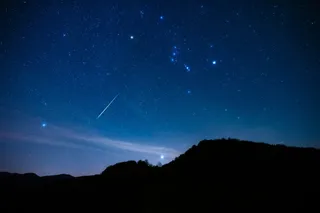
And spooky season still has plenty of celestial treats in store, including three separate meteor showers. Here are some of the events to look forward to over the coming weeks.
Read More: The 2026 Solar Eclipse Is Just the Beginning — How to Plan for the 2027 'Eclipse of the Century'
October 6: Jupiter’s Lunar Occultation
On October 6, 2026, stargazers can watch the moon directly pass over Jupiter — a process called occulting. This will take place in the very early hours of the morning, so don’t forget to set your alarm clock. According to the Night Sky Network, Jupiter’s “contact” with the moon will begin around 4:14 a.m. EDT and last a little over an hour, though exact times vary by location.

 Explore All Options
October 9: The Draconid Meteor Shower
The Draconids are a relatively short-lived shower and will grace our skies for just a few days in the second week of October. It will reach its peak on October 9, 2026, coinciding with a waning crescent moon, which makes for a perfect stargazing opportunity.
According to the Royal Museums Greenwich, the best time to view the displays is in the evening after the sun has set.
October 12: Mercury is at its Greatest Elongation East
On October 12, 2026, Mercury will reach its furthest point from the sun. This makes it a particularly good time to observe the messenger planet, because this distance means it escapes the sun’s glare.
October 14: The Southern Taurids Meteor Shower and Halloween Fireballs
The Southern Taurids have been active since September 2026 and will continue to light up the skies until November 2026. These meteors aren’t exactly known for their number — at their peak, you can expect roughly five per hour — but they can be exceptionally bright, hence their nickname “Halloween fireballs.”
The Southern Taurids have two peaks, the first of which is due to occur on October 14, 2026. The second, during which “Halloween fireballs” are more often observed, is not expected until early November 2026, according to the American Meteor Society.
October 21-22: The Orionid Meteor Shower
The third and final meteor shower of the month is the Orionids. The show runs all month but peaks on the night of October 21, 2026.
NASA describes the Orionids as one of the year's most beautiful showers, citing their speed (41 miles (66 kilometers) per second) and brightness. You can expect between 10 and 20 meteors per hour, but thanks to their neck-breaking speed, these pieces of space rock can leave behind long trains lasting anywhere from a few seconds to minutes.
According to NASA, the best time to view the show will be shortly before dawn, once the moon has set.
October 25-26: The Hunter’s Moon
October’s full moon falls towards the end of the month and will reach its maximum fullness in the evening of October 25, 2026, or in the very early hours of October 26, 2026, depending on your location.
October 27-28: The Moon and the Pleiades
Towards the end of the month, the moon will approach the Pleiades — a star cluster also known as the Seven Sisters.
According to NASA, you can see these stars from almost anywhere in the world, and you don't need a telescope or binoculars to see them. Of course, if you do, they will look even more spectacular.
Read More: Why the Roman Telescope Is Bound For a Cosmic Sweet Spot Far Beyond the Moon
Article Sources
Our writers at Discovermagazine.com use peer-reviewed studies and high-quality sources for our articles, and our editors review for scientific accuracy and editorial standards. Review the sources used below for this article:
- This article references information from the Royal Museums Greenwich: Night sky highlights - October 2026
- This article references information from the Royal Museums Greenwich: When and where to see the Draconid meteor shower
- This article references information from the Royal Museums Greenwich:Space and astronomy highlights in 2026
- This article references information from the American Meteor Society: Meteor Shower Calendar 2026/2027
- This article references information from NASA: Orionids Meteor Shower
- This article references information from the Night Sky Network: Jupiter/Moon Occultation