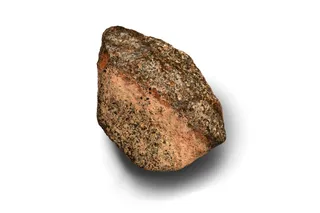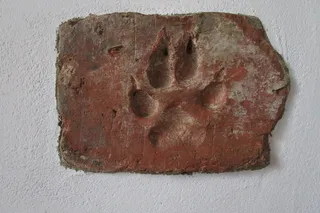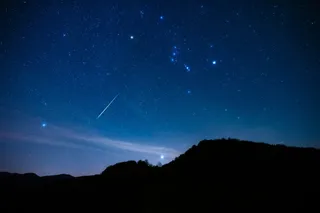




As October 2026 comes to an end, here is a roundup of all the "Explore with Discover" tips so you can learn how to monitor bats in your backyard, use NASA's tool to explore active missions, hike trails responsibly, and understand what it means to leave "no trace," and what to do if you find a fossil, artifact, or even a meteorite.
We'll be sharing these science tips each week on wildlife, adventurous locations, and tools that can help you interact with your surroundings. What do you want to know more about? Let us know at editorial@discovermagazine.com.
1. Explore Active Missions with NASA's Eyes
Ever wonder where a spacecraft is after it launches and disappears from view? NASA has a tool that lets you follow along from your computer or phone.
NASA’s Eyes uses mission data to show what’s happening across the Solar System in 3D. You can find spacecraft on their journeys, explore planets and moons up close, and get a better sense of the enormous distances these missions travel.
There’s plenty to explore:
- See where missions are now: Find spacecraft traveling through the Solar System and where they are in relation to planets and moons.
- Follow their journeys: Look back at where a mission has been or jump ahead to see where it’s going.
- Explore closer to home: You can also learn about asteroids passing near Earth and satellites studying our own planet.
- Head beyond the Solar System: Another part of Eyes lets you explore thousands of planets orbiting other stars.
- Revisit famous missions: Follow journeys like New Horizons’ trip past Pluto or Cassini’s exploration of Saturn.
So, the next time you hear about a spacecraft traveling millions of miles from Earth, you can find out where it actually is.
2. How to Become a Bat Monitor

(Image Credit: MockupMonster/Shutterstock)
You don't need to be a wildlife biologist to help scientists keep track of bats. Volunteer bat monitors can help researchers figure out which species live in an area, where they're active, and how populations are changing over time.

 Explore All Options
Because most bats are active after dark and use sounds too high-pitched for humans to hear, many monitoring programs rely on acoustic detectors. Other programs may ask volunteers to count bats leaving roosts or follow designated monitoring routes.
Want to become a bat monitor? Here's how to get started:
- Check for a local monitoring program. Search your state or provincial wildlife agency, conservation authority, nature center, university, or bat conservation organization for volunteer opportunities.
- Connect with the North American Bat Monitoring Program (NABat).
- Look for community-science projects. Some programs lend acoustic detectors to volunteers and provide training on how and where to deploy them, like the Toronto Zoo, which has trained hundreds of community scientists to record bat calls.
Make sure to never handle a bat unless you're properly trained and permitted. Monitoring usually involves watching or listening from a safe distance.
The information volunteers collect can become part of much larger datasets used to track bat populations across North America. That matters because bats face threats including white-nose syndrome, habitat loss, and deaths associated with wind-energy facilities, while researchers still lack good population data for many species.
So next time bats start appearing over your backyard at dusk, there may be a way to do more than watch them — you could help scientists learn where they're living and how they're doing.
Read More: Echolocation Shapes a Bat’s Skull to Match Specific Frequencies
3. Hiking Trail Safety and Responsibility

(Image Credit: Unai Huizi Photography/Shutterstock)
Whether you're going out for a casual stroll or a longer thru-hike, the trails are for everyone. Before you set out, however, it’s important to keep in mind trail etiquette and safety so that everyone can continue to enjoy these natural places.
Here are a few rules to follow while on the trail:
- Follow Leave No Trace practices: Don’t take rocks, sticks, or wildflowers home with you. They may be important for the ecosystem. Also, don’t leave things like garbage or food waste, such as seed shells or fruit peels, behind. If you bring it in, bring it back out.
- When hiking downhill, remember that uphill hikers have the right of way. Take a step to the side to allow uphill hikers to continue on.
- If passing someone on the trail, pass to the left, and alert that person to your presence. Simply saying “on your left” does the trick.
- Stay on the trail for your safety and to preserve the environment. Going off trail could lead to someone getting lost or injured. It could also cause damage to a fragile ecosystem.
- Respect wildlife and keep pets on a leash. This helps prevent dangerous wildlife interactions and keeps the ecosystem safe.
- Bring proper gear and supplies, including food and water, good shoes, and other hiking basics. This will help you have a fun and safe time.
The outdoors can be a fun and relaxing place. Taking these precautions can help ensure your hiking trip goes off without a hitch.
4. What To Do If You Find Fossils, Artifacts, or Meteorites

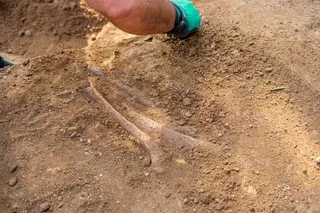
(Image Credit: Frame Stock Footage/Shutterstock)
Imagine you're out for a walk and spot what looks like a dinosaur bone, an ancient arrowhead, or a strange metallic rock that may have fallen from space. Your first instinct might be to pick it up — but that can sometimes erase valuable scientific information.
Where an object is found, how it's positioned, and what surrounds it can be just as important as the object itself.
A few things to remember if you come across these objects:
- Fossils: If you find a fossilized bone, tooth, track, or plant impression on public land, photograph it, record the location, and leave it in place. In places like U.S. national parks, collecting fossils is prohibited.
- Artifacts: Pottery fragments, projectile points, old tools, beads, or other archaeological objects should generally be left exactly where they are. Take photos or contact a park ranger, archaeologist, museum, or local heritage authority.
- Meteorites: If you find an unusually heavy, dark rock with a melted-looking surface, it could be a meteorite. If found on private property, permission from the landowner is required, and on public land, specific collecting rules may apply.
And don't clean, scrape, break, or "test" a find before an expert sees it. A layer of dirt, surrounding sediment, or even the object's exact position can contain clues about its age and history.
The best rules when finding a unique object are simple — photograph it, note the location, leave it where it is, and check with an expert before taking anything home. You may have found something far more important than just an interesting souvenir.
Read More: The Orionid Meteor Shower Is About to Peak With Colorful Fireballs Leftover from Halley's Comet