

The heart and brain may be more strongly linked than previously thought, as even a subtle decline in heart function could indicate future cognitive decline, memory impairment, and brain damage as we age.
New research published in the Journal of Neuroscience, led by Xia Zhang of the Max Planck Institute for Human Cognitive and Brain Sciences, tracked patients from the Leipzig Heart Study over 3.5 years and found that heart dysfunction could predict brain tissue degradation associated with Alzheimer’s disease.
The study finds a link between heart health and cognitive decline, and could serve as an early indicator of cognitive decline.
Tracking Heart Function and Cognitive Decline
Previous research states that heart failure increases the risk of cognitive decline. However, most of that previous research focused only on advanced disease stages, where visible brain damage was already present. This new study looks for earlier signs of cognitive risk.
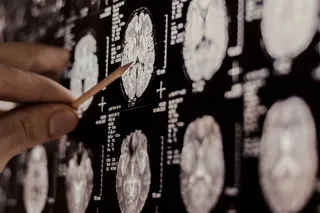
For their research, Zhang and the team followed 73 patients from the Leipzig Heart Study. The patients included those with established heart failure and some with suspected coronary artery disease. The team recorded a baseline cardiac health indicator for each patient and then conducted cognitive testing and a brain MRI about 3.5 years later.
Based on the data gathered, the team examined two common cardiac biomarkers: left ventricular ejection fraction (EF) — how well the heart pumps blood — and N-terminal pro-B-type natriuretic peptide (NT-proBNP) — a biomarker of heart failure severity and cardiac stress.

 Explore All Options
The team found that a lower baseline ejection fraction was associated with increased mean gray matter diffusivity — an MRI-derived measure that reflects reduced microstructural integrity in the brain. What surprised researchers was that the association appeared in participants without clinical heart failure, indicating that brain vulnerability may start before cardiovascular disease develops.
Read More: Alzheimer’s-Related Memory Concerns Linked to Glitches in the Brain’s Replay Process
The Heart-Brain Continuum
The research team also found that microstructural damage in the brain, particularly in certain memory-related regions, appears to mediate the relationship between memory performance and cardiac function. Essentially, the researchers found that heart dysfunction was linked to memory performance indirectly through microstructural brain changes.
The brain regions most affected included the cingulate gyrus, lingual gyrus, inferior occipital gyrus, parahippocampal gyrus, and precuneus, according to the study. These regions play a major role in memory retrieval, formation, and visuospatial processing; they also overlap with the brain networks commonly affected early in Alzheimer’s disease.
The team found that these results suggest the existence of a heart-brain continuum, in which a decline in cardiovascular function contributes to small neurological injury and eventually impacts cognition as a whole.
Improving Heart and Brain Health
While the heart and brain have long been connected, this new study highlights how delicate the relationship truly is. Because these brain changes appear long before critical heart problems arise, the research team suggests that monitoring these changes could help identify patients at elevated risk of cognitive decline and perhaps intervene before more serious damage occurs.
The team also suggests that treating heart issues earlier can help with long-term brain health.
“Tracking brain microstructural integrity offers a novel avenue for neurological risk stratification in patients with cardiac dysfunction,” Zhang said in a press release.
The findings could eventually help identify people at elevated risk for cognitive decline earlier, though larger studies are needed before these findings can be applied clinically.
Read More: Large Genetic Study Identifies Dozens of New Alzheimer’s Risk Genes
Article Sources
Our writers at Discovermagazine.com use peer-reviewed studies and high-quality sources for our articles, and our editors review for scientific accuracy and editorial standards. Review the sources used below for this article:
- This article references information from a new study published in the Journal of Neuroscience: Mapping the Heart–Brain Continuum beyond Heart Failure: Why Neurology Matters