For people born with familial hypercholesterolaemia, an inherited condition that causes dangerously high cholesterol from birth, managing it isn't a lifestyle choice. It's a daily obligation: pills every morning, injections every few weeks, a regimen that begins young and, for most, never ends. A new experimental therapy aims to change that with one infusion.
Results from an early clinical trial, published in the New England Journal of Medicine, show that one dose of VERVE-102, a gene-editing therapy developed by Verve Therapeutics, a subsidiary of Eli Lilly, can lower harmful cholesterol in patients with the inherited condition or early-onset heart disease. In the small group of patients tracked longest, those lower levels stayed down for at least a year.
“This therapy is likely to revolutionise our management of lipids and cardiovascular disease, as a one-off permanent treatment could in the future obviate the need for daily pills,” said Jaimini Cegla, study co-author, in a press release. “This novel approach is a game-changer for people living with high cholesterol and heart disease.”
How One Dose of Gene Editing Could Lower Inherited High Cholesterol
The therapy targets a gene in the liver called PCSK9, which regulates how much harmful cholesterol the body clears from the bloodstream. People with familial hypercholesterolaemia are born with variants that keep cholesterol elevated from birth, raising their lifetime risk of heart attack and stroke even with medication.

 Explore All Options
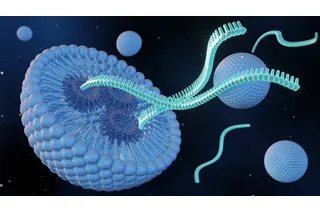
VERVE-102 doesn't cut the gene out or replace it. It changes a single letter in the DNA code, an edit that stops the liver from producing the PCSK9 protein. Without that protein interfering, the liver becomes better at pulling harmful cholesterol out of the blood.
At the highest dose tested, PCSK9 levels dropped by an average of 88 percent. Harmful cholesterol fell by an average of 62 percent, comparable to what patients achieve with the injected cholesterol drugs currently on the market, but from a single treatment rather than ongoing therapy.
Read More: Eggs and Cholesterol Have a Complicated Health Relationship — What Have We Gotten Wrong?
One Infusion Lowered Harmful Cholesterol for at Least a Year
The trial enrolled 35 patients across sites in Australia, Canada, New Zealand, and the United Kingdom, including Imperial College Healthcare NHS Trust, and was primarily designed to assess safety. Some patients experienced mild reactions during the infusion itself, and some showed temporary signs of liver inflammation in the days after treatment. No serious side effects occurred, and everyone who started the trial finished it.
In 15 patients with at least one year of follow-up, cholesterol levels stayed down. The liver replaces its cells roughly every 200 to 300 days, making the fact that reductions held through that process one of the more encouraging findings. Larger and longer studies are still needed to understand how long the effects last, and all trial participants are expected to be monitored for 15 years.
Part of what makes a one-time treatment so appealing is how poorly the current model works in practice. Between 30 and 50 percent of patients stop taking their cholesterol medication within a year, whether because of side effects, cost, or the difficulty of sustaining a daily routine across decades.
Why Permanently Lowering Cholesterol Could Be a Game-Changer
The science behind this therapy stretches back 20 years, to the discovery that some people are born naturally without a working PCSK9 gene. Those people have lower cholesterol throughout their lives and up to 88 percent lower lifetime risk of heart disease, and appear to be otherwise healthy.
For patients born with familial hypercholesterolaemia, that protection has always been just out of reach. The pills and injections help, but they depend on the patient never stopping, never missing a dose, never losing access. A single infusion that does the same job permanently is a different kind of medicine entirely, and for people who have been managing this condition since childhood, that difference is not a small one.
This article is not offering medical advice and should be used for informational purposes only.
Read More: Do Omega-3s Really Protect The Brain? The Answer May Depend on Your Health
Article Sources
Our writers at Discovermagazine.com use peer-reviewed studies and high-quality sources for our articles, and our editors review for scientific accuracy and editorial standards. Review the sources used below for this article:
- This article references information from a study published in the New England Journal of Medicine: In Vivo Base Editing of PCSK9 with VERVE-102 for Hypercholesterolemia