The rete ovarii (RO) is a small structure attached directly to the ovary that has largely faded from view since it was first described more than a century ago. Its name comes from the Latin word for “network,” referring to the interconnected tubes and channels that make up the structure, according to the National Cancer Institute.
There is a similar structure in males called the rete testis, which sits inside the testicles and helps transport sperm. But unlike its male counterpart, the RO was never assigned a clear role in the female reproductive system. Over time, it was often dismissed as a leftover structure with little or no function and eventually disappeared from many anatomy textbooks.
Now, recent research from a study published in eLife in March 2025 is bringing this overlooked part of the ovary back into focus. A closer look using modern imaging and molecular techniques suggests that the RO may be far more active and complex than scientists once thought.
A Forgotten Organ Structure
Early editions of Gray’s Anatomy, a classic anatomy book, included the RO in illustrations of the ovary. More recent editions, however, left it out, reflecting the long-standing assumption that the structure was a simple, functionless remnant.
That assumption is particularly puzzling because the RO is found across a wide range of mammals, including guinea pigs, cows, cats, sheep, pigs, dogs, monkeys, camels, and humans. Previous studies had hinted that it could produce and release substances, but this possibility was never experimentally confirmed. Without a clear function, the RO remained something of an anatomical mystery.

 Explore All Options
The 2025 study has provided a more detailed look at the structure, suggesting that its role may extend beyond being the female equivalent of the rete testis.
Read More: A Single DNA Letter Change Can Trigger Female Mice to Develop Testes
New Research Brings Rete Ovari Back into Focus
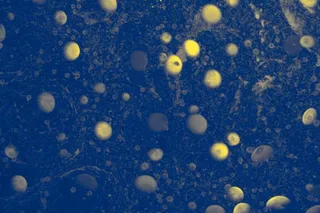
Researchers at Duke University Medical Center examined how the RO develops alongside the mouse ovary. Rather than relying only on thin slices of tissue, as many earlier studies had, they used advanced microscopy to image entire ovaries. This allowed them to see how the RO develops in relation to the ovary and nearby tissues.
Their observations revealed three distinct regions of the RO that remain present in adult animals. Some sections are made up of solid cords of cells, while others form hollow tubes. These tubular areas appear capable of moving cellular material and fluids toward the ovary.
The researchers also used mass spectrometry to identify proteins inside the hollow spaces of the RO. Many of these proteins are secreted by cells and could potentially influence how the ovary functions.
Intriguingly, one region of the RO was also connected to nerve fibers, raising the possibility that it could act partly as a sensory structure and help the ovary respond to signals from its surroundings.
New Component of the Female Reproductive System
The findings suggest that the RO may be involved in maintaining the ovary and supporting its development. Its close physical connection to the ovary, combined with its network of tubes, secreted proteins, and connections to nerves, points to a structure that could communicate with and influence the organ.
Based on their findings, researchers suggest it could potentially be considered an additional component of the female reproductive system, alongside structures such as the ovaries, oviducts, uterus, cervix and vagina.
There is still much to learn. Future research will investigate how the RO responds to hormones and other signals in the body, and whether factors such as diet or immune activity can change the proteins it releases. Scientists hope these studies will reveal whether the RO helps relay information about the body's changing conditions back to the ovary.
This article is not offering medical advice and should be used for informational purposes only.
Read More: Organ‑on‑a‑Chip Models Now Include the Cervix — Revealing New Clues About STIs
Article Sources
Our writers at Discovermagazine.com use peer-reviewed studies and high-quality sources for our articles, and our editors review for scientific accuracy and editorial standards. Review the sources used below for this article:
- This article references information from the National Cancer Institute: rete testis
- This article references information from a study published in eLife: Rediscovering the rete ovarii, a secreting auxiliary structure to the ovary