First New Cat Species in a Century, an mRNA Flu Vaccine, and Earth's Magnetic Field Could Affect How We Age
Discover the top stories from Sept. 19 to Sept 25, 2026, including a new cat species discovered in Bolivia and what to know about the recently approved mRNA flu vaccine.
Jenny Lehmann is an Associate Editor at Discover Magazine who writes articles on microbiology, psychology, neurology, and zoology, and oversees the Piece of Mind column of the print issue.
Jack Knudson is an Associate Editor for Discover Magazine who writes articles on space, ancient humans, animals, and sustainability, and manages the Planet Earth column for print.
Stephanie Edwards is the Engagement Specialist at Discover Magazine, who manages all social media platforms and writes digital articles that focus on archaeology, the environment, and public health.
Missed some of our top stories from the week? Check out our round-up below, covering the biggest science news and stories that matter.
This week's stories, from Sept. 19 to Sept. 25, 2026, include the first new cat species discovered in a century, a recently approved mRNA flu vaccine, an exoplanet that is orbiting its star backward, how Earth's magnetic field may affect human aging, whether we should be worried about a measles crisis, and a surprising skill shared by dogs and humans.
1. Cub Found in Bolivia Helped Uncover the First New Cat Species Named in Over a Century
Individual of Leopardus tilcayo that lives in La Senda Verde Animal Refuge, La Paz, Bolivia.(Image Courtesy of Paola Nogales-Ascarrunz)
A resident of Bolivia’s Nor Yungas region found Tigrino as a cub in 2016. The small wild cat later arrived at La Senda Verde wildlife sanctuary and was thought to belong to the species Leopardus tigrinus. But when biologist Paola Nogales-Ascarrunz and her colleagues studied his DNA, they found that he belonged to a species that had never been described.
2. First mRNA Flu Vaccine Approved in the U.S. Now Available for Adults 50 Years and Older
Just in time for the start of the annual flu season, a new type of flu vaccine has hit the market. The biopharmaceutical company Moderna has developed mFLUSIVA, the first mRNA flu vaccine to be approved in the U.S.
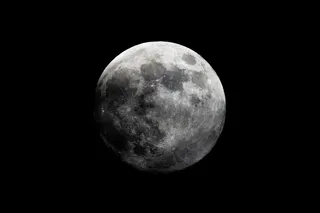
About 73 light-years from Earth lies an exoplanet that has it all backward. While planets generally orbit in the same direction as their host star, this one is an outlier: It travels around its star in the opposite direction to the star’s rotation, leaving astronomers bewildered.
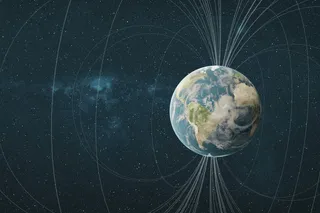
4. Earth's Magnetic Field May Influence Aging by Affecting How Mitochondria Produce Energy
Earth’s magnetic field is deeply ingrained in our lives, even if we can’t perceive it. It interacts with our bodies at all times, even down to the cellular level. And while being immersed in the magnetic field doesn’t directly impact our health day-to-day, blocking this invisible force from reaching our bodies may have some surprising effects.
5. The U.S. May Be Approaching a Measles Crisis, and Some Babies Face Risks Before Birth
The ability to linger helps explain why measles has the dangerous potential to turn into an epidemic. As U.S. measles cases climb, doctors are also confronting a particularly vulnerable group of patients — babies whose exposure begins before birth.
6. Dogs Show a Surprising Speech-Processing Skill Once Thought Unique to Humans
Say "doyouwannagoforawalk" out loud, and you'll notice there are no gaps between the words. Your brain adds them. Your dog's brain does something similar, relying on consonants to pick out word-like patterns in continuous speech.
Anastasia Scott is an Assistant Editor at Discover Magazine. Her work focuses on bringing clarity and creativity to scientific ideas. View Full Profile
Jenny Lehmann is an Associate Editor at Discover Magazine who writes articles on microbiology, psychology, neurology, and zoology, and oversees the Piece of Mind column of the print issue.View Full Profile
Jack Knudson is an Associate Editor for Discover Magazine who writes articles on space, ancient humans, animals, and sustainability, and manages the Planet Earth column for print.View Full Profile
Stephanie Edwards is the Engagement Specialist at Discover Magazine, who manages all social media platforms and writes digital articles that focus on archaeology, the environment, and public health.View Full Profile









 Explore All Options