Stephanie Edwards is the Engagement Specialist at Discover Magazine, who manages all social media platforms and writes digital articles that focus on archaeology, the environment, and public health.
In a digital landscape where standout stories and striking visuals move fast, Discover’s social media channels continue to spark conversation, curiosity, and connection. This collection brings together our top-performing posts — the stories that resonated most with our audience. These are the posts that rose to the top and showcase the best of Discover’s voice across platforms.
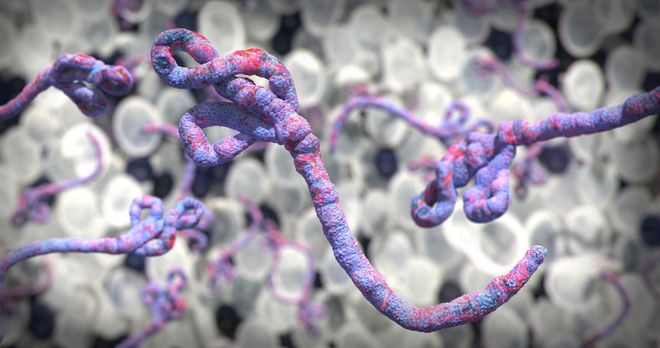
Scientists Are Using COVID-19 Technology to Quickly Build a Vaccine for a Rare Ebola Strain
(Image Credit: Giovanni Cancemi/Shutterstock)
Scientists in the UK are racing to develop a new Ebola vaccine that could be ready for human trials within months as an outbreak grows in Central Africa.
Researchers at Oxford University say they are urgently adapting vaccine technology originally used during the COVID-19 pandemic to target the rare Bundibugyo strain of Ebola — a version of the virus for which there is currently no proven vaccine.
The outbreak, centered in the Democratic Republic of Congo, has already led to hundreds of suspected cases and dozens of deaths. Bundibugyo Ebola kills about one-third of those infected, making rapid vaccine development critical if the outbreak worsens.
The vaccine uses a genetically modified chimpanzee cold virus to safely train the immune system to recognize and fight Ebola without causing infection itself.
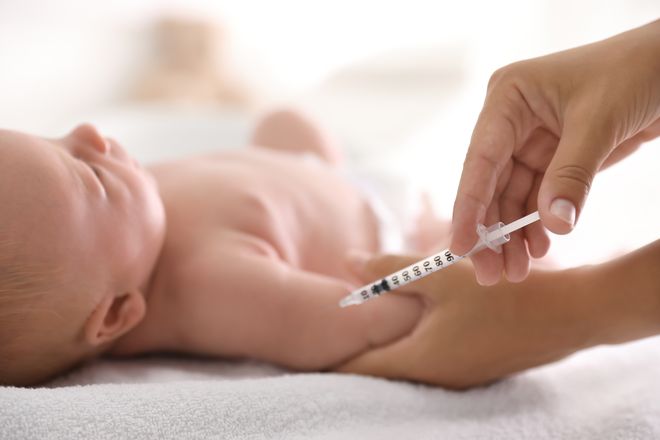
Doctors Warn That Parents' Refusal of Vitamin K Shot is On the Rise, Putting Babies at Risk
(Image Credit: New Africa/Shutterstock)
A routine newborn shot that has protected babies for decades is being rejected by a growing number of parents — and doctors say the consequences can be deadly.
A new investigation found that more families are declining the vitamin K injection given shortly after birth, a simple treatment that helps newborns’ blood clot properly. Without it, babies face a rare but potentially fatal condition called vitamin K deficiency bleeding, which can cause catastrophic internal bleeding, brain damage, and death.
Research shows babies who don’t receive the shot are 81 times more likely to develop late vitamin K deficiency bleeding, and about 1 in 5 affected infants die. Yet refusal rates have been climbing, with one national study finding that more than 5 percent of U.S. newborns did not receive the injection in 2024 — a 77 percent increase from 2017.
Doctors say much of the trend is being driven by misinformation on social media, where the vitamin K shot is often incorrectly grouped with vaccines despite serving a completely different purpose.
A New Study Found That Cannabis Use Likely Increase Anxiety, Depression, and Suicidality
A major Canadian study is raising new concerns about cannabis and mental health.
An analysis of data from 35,000 Canadians found a strong and growing link between cannabis use, anxiety, and depression — a connection that has only intensified over the past decade. Published in The Canadian Journal of Psychiatry, the study examined national survey data from Statistics Canada covering the years 2012 to 2022.
Over that period, reports of generalized anxiety disorder and major depressive episodes nearly doubled, while suicidality among youth rose by 44 percent. Cannabis use followed a similar trajectory: the number of people using cannabis multiple times a week more than doubled. By 2022, regular users were about five times more likely to report anxiety, depression, or suicidality than non-users.
Researchers suggest that legalization, stronger products, wider availability, and using cannabis to cope with stress may be contributing factors. The findings highlight the urgent need for early mental health screening among cannabis users and routine screening for cannabis use in mental health care.
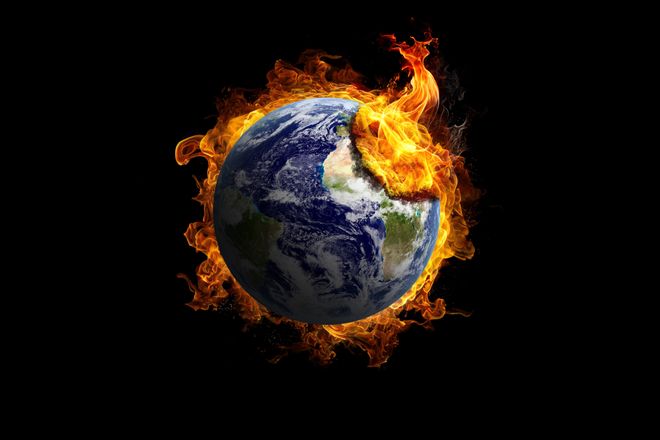
A New Report Warns That Earth Could Breach the Critical Temperature Threshold In Just Four Years
(Image Credit: Ad Gr/Shutterstock)
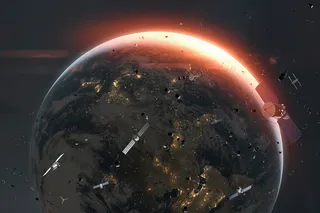
The Earth is trapping heat faster than ever before, and scientists warn that the world could breach the critical 2.7 degrees Fahrenheit (1.5 degrees Celsius) threshold in just four years.
According to a major new report involving more than 70 climate scientists, human activity pushed global warming to about 2.47 degrees Fahrenheit (1.37 degrees Celsius) above preindustrial levels in 2025, while greenhouse gas emissions reached an all-time high in 2024. The study, published in Earth System Science Data, found that the planet’s energy imbalance — a measure of how much excess heat Earth is accumulating — has doubled in recent decades and is now at a record level.
The climate system is already showing the effects. Sea levels have risen 9 inches since 1901 and are accelerating, while marine heat waves are becoming dramatically more common. In 2025 alone, the world experienced 65 days of marine heat waves, and the number of such events has more than tripled since the early 1990s.
Perhaps most alarming, the researchers estimate humanity has only 130 billion tons of carbon dioxide left in its remaining carbon budget for keeping warming below 2.7 degrees Fahrenheit (1.5 degrees Celsius). At current emission rates, that budget could be exhausted in about three years.
Endangered Red Wolves Are Making a Comeback After Four Litters of Pups Were Born in North Carolina
A rare conservation success is unfolding in North Carolina.
Four litters of endangered red wolf pups have been born in the wild, with an estimated 12 to 16 pups surviving their first few months of life.
With only 22 adult red wolves remaining in the wild, every new pup is a meaningful step toward recovering one of the world’s most endangered wolf species.
Conservationists say the births are the result of years of collaboration between wildlife agencies, private landowners, and local communities, and offer renewed hope that this iconic American predator can continue its comeback.
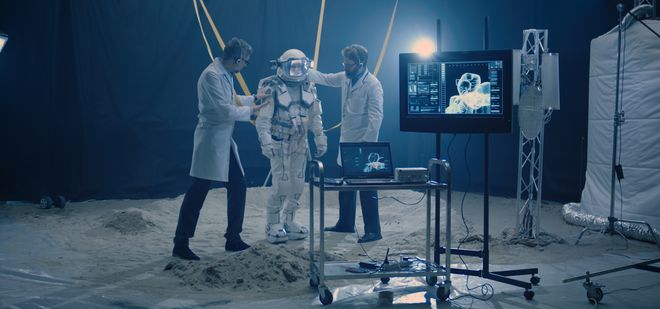
Would You Spend a Year Locked Inside a Mars Habitat? NASA is Now Accepting Applications
(Image Credit: Frame Stock Footage/Shutterstock)
NASA is looking for volunteers willing to spend a full year living in isolation for a simulated Moon and Mars mission on Earth.
Beginning no earlier than August 2027, the study will place four participants inside specialized habitats at NASA’s Johnson Space Center to mimic both the journey through deep space and life on another planetary surface. Researchers hope the mission will reveal how astronauts adapt physically and psychologically during long-duration exploration missions.
Applicants must be U.S. citizens or permanent residents, generally between 30 and 55 years old, proficient in English, medically and psychologically fit, and have a STEM background or equivalent military experience. Selected volunteers must commit to roughly 14 months, including training before and after the year-long mission, and will receive compensation for participating.
You May Have Missed This Interview: How Space Changed Sunita Williams' Perspective on Our Place in the Universe
Retired NASA astronaut Sunita Williams has traveled to space three times, spending hundreds of days aboard the International Space Station (ISS). During her missions, she witnessed dazingly aurora dance above Earth, tracked glaciers from orbit, and experienced the "overview effect," a profound shift in perspective that astronauts experience when viewing our planet from space. In this interview, Monica Cull talks with Williams about what it's like to perform a spacewalk, how living and working in space changed her outlook on life, and why continued exploration beyond Earth matters.
Make sure to follow us on Facebook, Instagram, and X to catch all the most viral stories as they go live.
Stephanie Edwards is the Engagement Specialist at Discover Magazine, who manages all social media platforms and writes digital articles that focus on archaeology, the environment, and public health.View Full Profile








 Explore All Options