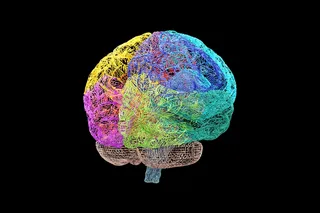


New research has investigated the potential of the cannabis-derived compound cannabidiol (CBD) to reduce inflammation in a mouse model of Alzheimer’s disease, the most prevalent cause of dementia. The study showed that the compound could lower chemical markers related to brain inflammation. The findings have yet to be replicated in humans, but provide early evidence that research into CBD may produce useful compounds for managing Alzheimer’s.
Alzheimer’s disease research has focused on the disease's cellular hallmarks, such as amyloid plaques and tau tangles, for many years. Unconvincing results from trials targeting amyloid in people living with Alzheimer’s disease have reignited calls for a more holistic approach that also considers the influence of other disease processes, like chronic inflammation. Researchers believe that this process may also contribute to nerve cell damage.
Read More: New Tool That Tracks How the Brain Removes Waste Could Offer Clues About Alzheimer’s
Inflammation and the Brain
In the healthy brain, inflammation is a protective process. Immune cells, like microglia, remove harmful debris from the brain. But long-term inflammation can instead become harmful and damage brain tissue.
Researchers from Augusta University led the new study, which was published in eNeuro. Mice don’t develop Alzheimer’s disease, but animals can be genetically modified to develop human-like disease signs. Using one of these models, the team delivered CBD to the mice via inhalation. CBD is the second-most-common active ingredient in cannabis, behind only delta-9-tetrahydrocannabinol, commonly known as THC.

 Explore All Options
CBD can be created synthetically or derived from hemp, a plant related to marijuana. Many studies have sought to leverage CBD’s anti-inflammatory properties for therapies, but some of the drug’s potential applications, for example, in treating chronic pain, have come under heavy scrutiny, according to a study in The Journal of Pain.
Altering Inflammation and Immune Signaling
The researchers then examined how the compound altered inflammation and immune signaling throughout the central nervous system. The drug suppressed two key inflammatory pathways: the indoleamine 2,3-dioxygenase (IDO) pathway and the cyclic GMP-AMP synthase (cGAS) pathway, while also reducing levels of immune chemicals called cytokines.
"Alzheimer's work has long centered on plaques and tangles," said Babak Baban, an immunologist and co-author of the new study, in a statement. "But our study shows that chronic autoinflammation is also a core driver of the disease. What's exciting is that CBD not only calms this immune overactivation but, in earlier work, we've shown it can also help clear plaques and tangles through a different mechanism. Together, this points to a multitarget approach with real therapeutic potential."
Scientists increasingly believe that treatments affecting multiple disease-linked pathways will be needed to effectively treat Alzheimer’s disease, because the condition is so complex. The authors wrote in their paper that CBD also targets the contribution of brain cells called glia to Alzheimer’s disease and promotes survival pathways within neurons, raising hopes that CBD-based treatments may one day offer a multi-pronged benefit in Alzheimer’s disease.
While the study’s findings are promising, this area of research remains in its early stages, and translating findings from mice to humans is not straightforward. Careful clinical work will be required to first confirm the findings in humans. Nevertheless, they highlight the important role of inflammation in our brain, in sickness and health.
This article is not offering medical advice and should be used for informational purposes only.
Read More: Large Genetic Study Identifies Dozens of New Alzheimer’s Risk Genes
Article Sources
Our writers at Discovermagazine.com use peer-reviewed studies and high-quality sources for our articles, and our editors review for scientific accuracy and editorial standards. Review the sources used below for this article:
- This article references information from a study published in eNeuro: Rethinking Alzheimer's: Harnessing Cannabidiol to Modulate IDO and cGAS Pathways for Neuroinflammation Control
- This article references information from a study published in The Journal of Pain: Cannabidiol (CBD) Products for Pain: Ineffective, Expensive, and With Potential Harms
- This article references information from a study published in the Journal of Alzheimer's Disease: Cannabidiol Ameliorates Cognitive Function via Regulation of IL-33 and TREM2 Upregulation in a Murine Model of Alzheimer's Disease