Cannabis Use Linked to Stroke Risk, an Invasive Spider in Georgia, and How Nancy Grace Roman Became the Namesake of NASA's New Telescope
Discover the top stories from Aug. 29 to Sept. 4, 2026, including how recreational drugs may be linked to stroke risk even in younger users and the surprising diet of an invasive spider in Georgia.
Stephanie Edwards is the Engagement Specialist at Discover Magazine, who manages all social media platforms and writes digital articles that focus on archaeology, the environment, and public health.
Jenny Lehmann is an Associate Editor at Discover Magazine who writes articles on microbiology, psychology, neurology, and zoology, and oversees the Piece of Mind column of the print issue.
Missed some of our top stories from the week? Check out our round-up below, covering the biggest science news and stories that matter.
This week's stories, from Aug. 29 to Sept. 4, 2026, include a study on the links between recreational drug use and stroke risk, how Nancy Grace Roman became the namesake for NASA's recently launched telescope, new evidence that the Tasmanian tiger may have been hunted for the wrong reasons, a popular sweetener that could cause cardiovascular issues, the invasive Jorō spider taking root in Georgia, and how people with lung cancer had high levels of microplastics in their lungs.
1. Cannabis, Cocaine, and Amphetamines Linked to Up to 174 Percent Higher Stroke Risk in Adults Younger Than 55
After examining research involving more than 100 million people, scientists linked cannabis, cocaine, and amphetamine use with a higher likelihood of stroke. The findings suggest these substances may contribute directly when a blood vessel in the brain becomes blocked or ruptures.
2. How Nancy Grace Roman, the ‘Mother of Hubble,’ Became the Namesake of NASA’s New Telescope
Dr. Nancy Grace Roman with the James Webb Space Telescope (Image Courtesy of NASA/GSFC/Bill Hrybyk)
Dr. Nancy Grace Roman was a pioneer. At a time when few women studied astronomy, let alone climbed the upper rungs of the national space agency, Roman became NASA’s first chief of astronomy. Today, she is remembered as the “Mother of Hubble.”
3. The Tasmanian Tiger's Unique Skull Suggests Sheep Were Not Its Main Prey
Nearly 90 years after the last known thylacine died in 1936, researchers are using its skull to reconstruct the way it may have hunted. A studyfound that the predator’s jaws were poorly suited to gripping large, struggling animals. Instead, its disproportionately large skull and long, narrow snout may have helped it deliver fast snapping bites aimed at smaller, agile prey.
4. High Blood Levels of Popular Sweetener Xylitol Linked to Increased Cardiovascular Risk
As evidence of the potential adverse health effects of artificial and low-calorie sweeteners accumulates, researchers took a closer look at the popular sweetener xylitol. Based on health data from over 17,000 people, they saw a link between high blood levels of the sweetener and increased risks of several major cardiovascular events, such as death, heart attack, and stroke.
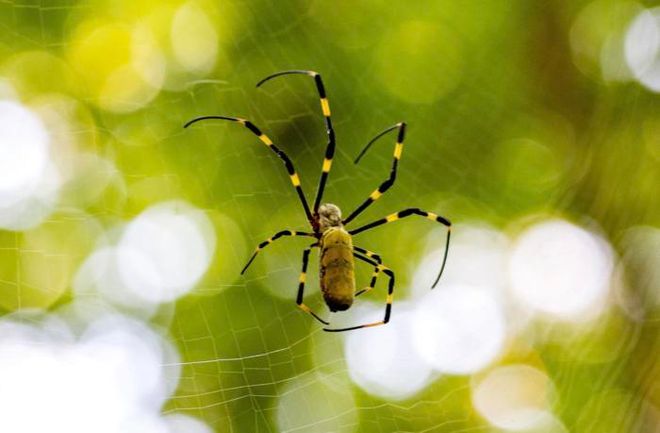
5. Invasive Jorō Spiders Have Made a Home in Georgia, but They May Not Threaten Native Spiders
A Jorō spider.(Image Credit: Dorothy Kozlowski/UGA)
When scientists set out to study Jorō spiders’ stomach contents, they were positively surprised. Jorōs seem to have a different prey preference than most local spiders, with a taste for bugs we often consider pests. Overall, the findings show the eye-catching new arrivals seem to peacefully coexist with other arachnids, with experts urging people to lay low on insecticides.
6. People With Lung Cancer Had Higher Levels of Microplastics in Their Lungs
When analyzing lung tissue samples, researchers found 70 out of 100 patients had microscopic pieces of plastic in the wash fluid, lung tissue, or both, according to the conference presentation. Of the 100 patients, 50 were later diagnosed with lung cancer, and their samples contained microplastics more often and in greater quantities than samples from patients without cancer.
Stephanie Edwards is the Engagement Specialist at Discover Magazine, who manages all social media platforms and writes digital articles that focus on archaeology, the environment, and public health.View Full Profile
Rosie McCall is a London-based freelance writer who frequently contributes to Discover Magazine, specializing in science, health, and the environment.View Full Profile
Anastasia Scott is an Assistant Editor at Discover Magazine. Her work focuses on bringing clarity and creativity to scientific ideas. View Full Profile
Jenny Lehmann is an Associate Editor at Discover Magazine who writes articles on microbiology, psychology, neurology, and zoology, and oversees the Piece of Mind column of the print issue.View Full Profile








 Explore All Options