Modern cancer therapies include technologies at the cutting edge of genomics, proteomics, and immunology. Researchers in Canada have now taken a step closer to deploying an anti-cancer therapy that involves something a little more natural — tumor-hungry bacteria.
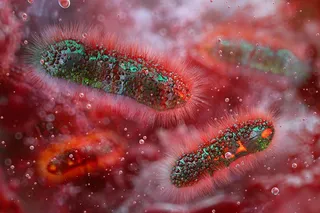
The bacterium at the center of this unusual approach to fighting tumors is the soil-loving Clostridium sporogenes. This bacterium can only thrive in an environment completely devoid of oxygen. This means that the regions deep inside a tumor are like home turf.
While the bacterium has some genetic limitations that prevent it from realizing its anticancer potential, a pair of recent studies demonstrated advances that could make C. sporogenes a viable therapeutic option.
“Bacteria spores enter the tumor, finding an environment where there are lots of nutrients and no oxygen, which this organism prefers, and so it starts eating those nutrients and growing in size,” said Marc Aucoin, study co-author and a chemical engineer at the University of Waterloo, in a statement.
Read More: Ultrasound Can Blast Tumors Without Surgery and Is Already Approved for Some Cancer Treatments
How Bacteria Could Impact Tumors
The dead cells at the core of a tumor are a perfect snack for C. sporogenes, but previous efforts to deploy the bacterium therapeutically have hit a snag. When the bacteria reach the tumor margins, the oxygen levels in the surrounding tissues increase, killing C. sporogenes before they can fully eradicate the tumor tissue.

 Explore All Options
Fully clearing the body of tumor cells is essential to avoiding cancer recurrence, so researchers like Aucoin have been searching for ways to help C. sporogenes survive at the edges of tumors.
In the first study, published in the Biotechnology Journal, the scientists transferred a gene from another bacterium, Clostridium aminovalericum. The gene, noxA, breaks down oxygen and is strongly expressed when C. aminovalericum comes into contact with air. When transferred, noxA helped increase C. sporogenes’s tolerance to air, allowing it to spend longer chowing down at the borders of a tumor.
But this gene must be turned on only at the right time to be therapeutically effective. If C. sporogenes were given the tools to survive in oxygenated environments all the time, it could start damaging healthy tissues outside the tumor.
A Winning Combination
In a second study, published in ACS Synthetic Biology, Aucoin’s team added a system that could prevent this in C. sporogenes’s genome. This system, called quorum sensing, came from the bacterium Staphylococcus aureus.
Gene systems that depend on chemicals released by bacteria. The systems activate when enough bacteria are present to produce a strong signal. In their study, Aucoin and his team showed that this system could induce C. sporogenes to express a green fluorescent protein, but they eventually want to combine it with noxA.
If this combination works, it would mean that once C. sporogenes leaves the tumor microenvironment and enters the wider body, the reduced density of the bacterium would shut off the quorum-sensing system and noxA, rendering it vulnerable to air once again and unable to survive or eat healthy tissue.
Now that the researchers have separately tested each part of the system that could turn C. sporogenes into a tumor killer, their next step is to conduct pre-clinical trials of the bacterium.
This article is not offering medical advice and should be used for informational purposes only.
Read More: Your Cat May Share the Same Cancer Genes as You, and Offer Clues for Treatment
Article Sources
Our writers at Discovermagazine.com use peer-reviewed studies and high-quality sources for our articles, and our editors review for scientific accuracy and editorial standards. Review the sources used below for this article:
- This article references information from a recent study published in ACS Synthetic Biology: Construction and Functional Characterization of a Heterologous Quorum Sensing Circuit in Clostridium sporogenes
- This article references information from a recent study published in the Biotechnology Journal: Heterologous expression of NoxA confers aerotolerance in Clostridium sporogenes