One day, we may be able to sniff out a disease instead of running a long list of invasive tests to get a diagnosis. Our bodies produce a wide array of molecules depending on our lifestyles and overall metabolic condition, some of which turn into gases that could be caught and analyzed to help us understand our health without a blood draw.
Researchers at the Fraunhofer Institute for Integrated Circuits IIS in Germany collected and tested odors from participants’ belly buttons, inner nose, and outer ears.
In their study, published in Scientific Reports, they showed that the scent profiles of healthy people and participants with either Parkinson’s, mild cognitive impairment, or COVID-19 differed from each other, which could one day help us fine-tune the technology for a new noninvasive diagnostic tool.
How Body Odor Could Help Detect Disease
To diagnose a disease, it often takes a wide array of tests to gather and analyze samples. For instance, health practitioners may take blood or tissue biopsies depending on the established protocols to identify a specific condition.
Researchers are constantly working on finding ways to make diagnostic processes less invasive and more accessible, for example, by looking for clues of a disease within biofluids (sweat, urine, and saliva).
Another avenue is analyzing the odors our bodies expel. The gases our bodies produce through various ways, such as evaporating sweat and skin oils, contain volatile organic compounds (VOCs), molecules the body generates through normal metabolic processes.

 Explore All Options
The profile of VOCs may look different between people and can depend on diet, lifestyle choices, or medical conditions, giving each person a unique scent “fingerprint.” Because of this, researchers wonder if a person’s distinct aroma, if analyzed with high-end equipment, could suffice to diagnose a previously undetected disease.
Read More: Early Prostate Cancer Diagnosis Soon Possible with Simple Urine Sample
Scent From Nose, Ear, and Belly Button Impacted by Health Status
The research team decided to take samples from body parts that are least exposed to perfume, soap, and other elements that could influence the samples, leading them to focus on parts of the inner nose, the outer ear, and the belly button.
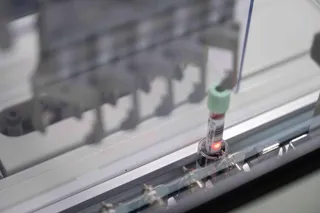
After swabbing those areas of 24 participants, of whom six had Parkinson’s disease, six had mild cognitive impairment, six had COVID-19, and six were healthy controls, the samples were analyzed using laser-based photoacoustic spectroscopy (LPAS). LPAS is a method that identifies VOCs by measuring sound waves produced when the sample absorbs light from a laser.
The results showed unique molecular profiles with patterns that matched among people with the same condition, with the clearest results coming from the nasal and belly button swabs. Interestingly, the most distinct scent profiles came from participants who were healthy and those with cognitive impairment.
A Potential New Diagnostic Strategy
After going through the results, the researchers found that only a few wavelengths of the wide spectrum captured the most important data, which means future analysis wouldn’t require the whole complicated setup of the LPAS technology to produce meaningful results.
However, the team notes that their study comes with some limitations. Since this was only a proof-of-concept approach, the number of participants was small, which doesn’t allow for final conclusions about diagnosing disease by swabbing certain body parts. Other limiting factors included the lack of age-matched groups and the highly controlled laboratory conditions, which aren’t representative of real-world testing.
Still, the team writes in their paper that “overall, the findings of this study demonstrate the feasibility of LPAS-based headspace analysis for detecting disease-associated spectral patterns,” which may lead to new diagnostic strategies in the future.
This article is not offering medical advice and should be used for informational purposes only.
Read More: First-Ever Smell Map Is a Breakthrough in Sensory Research, a Step to Help Us Tackle Loss of Smell
Article Sources
Our writers at Discovermagazine.com use peer-reviewed studies and high-quality sources for our articles, and our editors review for scientific accuracy and editorial standards. Review the sources used below for this article:
- This article references information from a study published in Scientific Reports: Detection of disease-associated VOC signatures with laser-based photoacoustic spectroscopy (LPAS)