

More than 8,000 years ago, fires blazed through part of what is today Israel, with so much intensity that they literally baked the Earth. What they left behind may have inspired the development of pottery — a key technology for humans, as it helped with the storage and transportation of food and other products.
“It was a very bright innovation because it allowed very many things that were not possible before,” Amos Frumkin, a geologist at the Hebrew University of Jerusalem, told Discover.
Frumkin believes that such fires, which have left a geological trace on the landscape, might have inspired humans in the Sha'ar HaGolan to develop some of the earliest pottery yet discovered in the Near East.
But not everyone is convinced about this simple explanation. Instead, some believe pottery in this region was likely made in imitation of things like stone bowls and through standardized techniques passed down through generations.
“[Pottery in southwestern Asia] probably comes out of various other craft traditions,” Kamal Badreshany, an archaeologist at Durham University in the U.K., told Discover.
Some of the earliest ceramics date back about 20,000 years in China’s Xianrendong Cave. But pottery likely developed independently in various parts of the world — Frumkin said that Indigenous American traditions may have also developed on their own, for example.

 Explore All Options
Frumkin and Badreshany both believe that pottery discovered at Sha'ar HaGolan in northeastern Israel near the Jordanian border — some of the oldest ceramics yet discovered in southwestern Asia — may have developed independently from the Far East ceramics around the same time as the dawn of agriculture in the region.
These ancient ceramics are preserved today as broken vessels with zigzagging designs and clay figurines.
Ancient Fires Baked The Earth
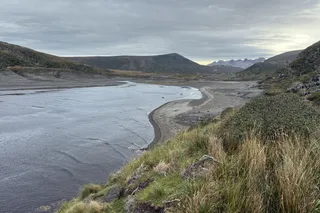
In a recent study published in Geomorphology, Frumkin found geological evidence for fires in sediments buried under the Dead Sea and Hula Lake — which has since dried up — from two periods. One was in the interglacial period just before the last Ice Age, while the other dates to the Neolithic period in the region, around 8,000 to 9,000 years ago.
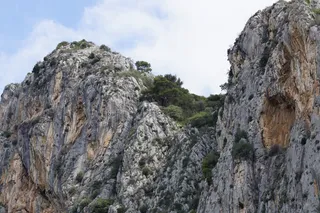
Other published research also found that the hills around the Dead Sea rift valley where Sha'ar HaGolan sits experienced significant soil erosion at these times. Evidence stored in mineral deposits in caves in the area further attests to soil movement.
“The cave serves as kind of a recorder of what happened above it,” Frumkin said.
The fast erosion of soils would have brought clay-rich sediment down from the surrounding hills into the valleys where modern humans were living in the more recent fire period Frumkin identified. These dates would coincide with the Sha'ar HaGolan village site known to archaeologists. Neolithic people in that settlement had adopted a more sedentary lifestyle than many of their ancestors, farming wheat and barley.
The ‘Natural Kiln Hypothesis’
Frumkin argues that people living in villages like that at Sha'ar HaGolan may have observed the hardening effect fire had on clay, inspiring them to shape it into pottery vessels in what he calls the “natural kiln hypothesis.” The pottery archaeologists have discovered at Sha'ar HaGolan is indeed made from the re-deposited terra-rossa clay from the hills, he added.
“Valley-dwellers observing fire’s transformative effect on redeposited terra rossa clay may have derived the principle underlying pottery manufacture, triggering its invention,” Frumkin wrote in his study.
Furthermore, the loss of resources from the surrounding forests and vegetation may have pushed valley dwellers to innovate with resources available in the valley bottom, like clay.
“Catastrophes can be paradoxically creative, forcing new solutions and revealing new possibilities,” Frumkin added.
But not everywhere agrees with this natural kiln hypothesis. Badreshany, who was not involved in Frumkin’s recent work but studies early Near Eastern pottery, leans more toward the work of Valentine Roux, a French archaeologist who developed an operational sequence theory of pottery development but wasn’t available to comment on Frumkin’s study.
“Rather than being the product of opportunistic experimentation, they emerged from established craft traditions long predating the invention of pottery and involving complex, standardized techniques transmitted through apprenticeship and social learning,” Badreshany said.
He resists the attempt to connect everything together in a eureka-like discovery. Instead, ceramic uses probably developed over time.
“There is no particular moment where someone realizes that if you burn clay in a fire, it holds grain without rats chewing it, and that helps us grow as a society,” he said. “The story is much more interesting and complex than that.”
What Did the Creation of Pottery Mean for Society?
Badreshany said that while societies didn’t need pottery to develop complexity, they began using it for both everyday purposes and ritual contexts related to large-scale feasting and “institutionally sponsored” activities. In the latter case, distinct pottery designs matter because they help archaeologists link pottery to particular periods or traditions.
The pottery of Sha'ar HaGolan, for example, is known as the Yarmukian culture. This style of ceramic, found in modern-day Israel, Palestine, Jordan, and Lebanon, had pots and other vessels with etched zigzagging lines.
“We found a lot of such vessels in caves in Israel,” Frumkin said, adding that they were not only useful for cooking techniques like making soup and for food storage, but also “beautifully decorated.”
It spread quickly, Badreshany said, as it was likely used as a high-status item in gift exchange or lavish consumption.
“It’s a new product — an innovation to enable new categories of conspicuous consumption, and this is why it spreads,” he said.
But the impact of such vessels takes a while to develop.
“Once pottery arrives, nothing else really changes in the archaeological record — so it’s not like this massive invention that changes humanity,” Badreshany said.
Read More: Chamber in Manot Cave May Be The Earliest Ancient Ritual Site in Southwest Asia
Article Sources
Our writers at Discovermagazine.com use peer-reviewed studies and high-quality sources for our articles, and our editors review for scientific accuracy and editorial standards. Review the sources used below for this article:
- This article references information from a study published in Geomorphology: Late Quaternary fire-induced erosion, impacts and innovations in the southern Levant
- This article references information from a study published in The Journal of the Council for British Research in the Levant: The development of integrated regional economies in the Early Bronze Age Levant: new evidence from ‘Combed Ware’ jars