Inside clumps of fossilized vomit recovered from beneath the North Sea, paleontologist Dirk Knaust found shells, worm tubes, and pieces of sea lilies. The remains pointed to a large animal that had been helping itself to shellfish on the seafloor. Knaust’s task was to work out which animal had left them behind.
A bone just inches from the clumps first made him think it belonged to a dinosaur, but CT scans showed it was part of the backbone of an ichthyosaur, a dolphin-like marine reptile. As he looked closer, however, another marine reptile, also not a dinosaur, seemed to be a better match: a long-necked plesiosaur (which looks a lot like the Loch Ness Monster you might picture).
In Geological Magazine, Knaust reports what he describes as the first identification of plesiosaur vomit and the shellfish it contained. His analysis shows that plesiosaurs may have fed in deeper marine waters before swimming into river deltas, and regurgitating the hard parts they couldn’t digest, perhaps while resting.
“I became increasingly excited when I started to realize the nature of these clumps, how they were produced, and what implications they have,” Knaust told Discover.
Identifying the Plesiosaur Behind the Fossilized Vomit

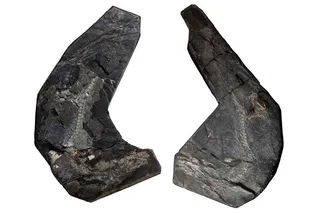
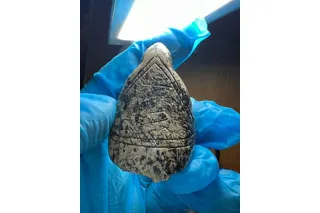
160-million-year-old plesiosaur vomit.
(Image Credit: Dirk Knaust)
Most of the clumps came from rock cores drilled near Norway’s Troll oil and gas field for a project to store carbon dioxide beneath the seabed. Knaust, who studies the fossil traces of invertebrates at Equinor, has spent three decades examining thousands of feet of North Sea cores. These specimens came from Jurassic rocks about 31 miles off Norway.

 Explore All Options
He studied more than 20 pellets of regurgitated food. Some measured around four inches or more, roughly the size of a large orange. He looked at how much undigested food they contained, along with their shapes and minerals, to separate vomit from fossilized feces. Alongside the shells, worm tubes, and sea lilies, he found hard parts from belemnites, extinct squid-like animals.
Their size helped him rule out fish, which vomit smaller pellets. Cephalopods, including squid and octopuses, didn’t fit the size and contents either. Sharks and crocodiles lived in the area, but the ones Knaust considered ate fish, and he wasn’t finding fish bones.
Knaust thought cryptoclidid plesiosaurs were the best match. They were big enough to bring up the clumps and fed on the kinds of animals he was finding inside.
“In Australia, Early Cretaceous plesiosaurs became preserved with their stomach content, which is remarkably similar in composition to the described regurgitalites from Norway,” he told Discover.
Read More: Kraken-Like Octopus Up to the Size of a 5-Story Building Stalked the Oceans 100 Million Years Ago
Following a Plesiosaur’s Meal Toward Shore
Plesiosaurs lived for over 140 million years, surviving as extinctions wiped out other animals. Cryptoclidids grew around 13 to 26 feet long and lived from the Middle Jurassic into the Early Cretaceous. Knaust thinks they used their long necks to gather food from the seafloor, swallowing hard-shelled prey whole.
“These food components were collected and swallowed, but only the soft parts digested, while the hard shelly parts became concentrated in clumps (or gastric pellets) to be orally rejected,” he explained to Discover.
Some of the prey needed steady salt levels and couldn’t have lived in a delta where incoming freshwater continually changed the salinity, leading Knaust to conclude that the plesiosaurs had eaten elsewhere, then carried their meals toward shore.
“Comparison with modern fur seals and sea crocodiles helped to interpret the behavior of the Jurassic plesiosaurs,” he shared with Discover.
Fur seals and marine crocodiles rest in sheltered areas on land after feeding. Knaust thinks plesiosaurs may have sought a similar break in sheltered coastal waters, perhaps even settling down for a nap, though their weight and body shape probably kept them underwater.
How Plesiosaur Vomit Survived Long Enough to Fossilize
Mucus deserves some credit for the discovery, too. It helped hold the pellets together, though most would still have broken apart in the waves. Some survived beneath river sediment or inside crustacean burrows long enough to fossilize.
“This is still just the beginning. There’s so much more we can learn from picking through what extinct animals threw up after dinner,” Knaust said in a press release.
Read More: Plesiosaur Sheds Light on Marine Reptile Evolution During the Jurassic Period
Article Sources
Our writers at Discovermagazine.com use peer-reviewed studies and high-quality sources for our articles, and our editors review for scientific accuracy and editorial standards. Review the sources used below for this article:
- This article references information from a study published in Geological Magazine: The fate of supposed plesiosaur vomit from Jurassic delta deposits offshore Norway