

Missed some of our top stories from the week? Check out our round-up below, covering the biggest science news and stories that matter.
This week's stories, from Sept. 26 to Oct. 2, 2026, include an update on the Perseverance Rover's search for life, how belly button odor could be used to detect disease, a Cold War satellite that exploded above Earth, gene-edited bananas that stay yellow longer, a collision between a sperm whale and a yacht in the South Pacific, and the 5 infections linked to 2.3 million cancer cases.
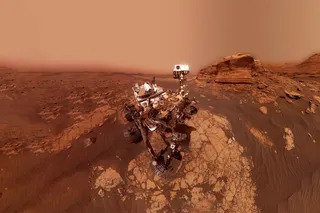
1. After 5 Years and 28 Miles on Mars, NASA's Perseverance Rover Is Still Searching for Clues to Ancient Life

(Image Credit: Artsiom P/Shutterstock)
NASA's Perseverance Rover is the most sophisticated robotic explorer that humans have yet launched. Thanks to its explorations and experiments, it has increased our knowledge of another planet more than just about anything we’ve ever managed to launch from Earth. Five years into its mission, this rover continues to provide valuable scientific data. And thanks to its durable construction, we expect it to serve us for many more years to come.
2. Belly Button Odor Could One Day Help Detect Parkinson's, Cognitive Impairment, and COVID-19
One day, we may be able to sniff out a disease instead of running a long list of invasive tests to get a diagnosis. Our bodies produce a wide array of molecules depending on our lifestyles and overall metabolic condition, some of which turn into gases that could be caught and analyzed to help us understand our health without a blood draw.

 Explore All Options
Read More: Belly Button Odor Could One Day Help Detect Parkinson's, Cognitive Impairment, and COVID-19
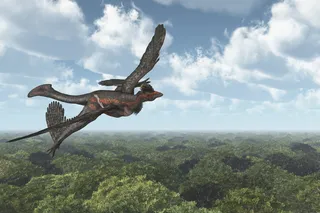
3. Cold War Spy Satellite Suddenly Shatters in Low Earth Orbit, Creating a Cloud of Debris That Could Threaten Other Spacecraft
Nearly four decades after it was launched to secretly eavesdrop on the Soviet Union, an American spy satellite has suddenly shattered above Earth. What caused the Cold War relic to break apart remains unclear, but the debris now drifting through low Earth orbit (LEO) could create a very real problem for other spacecraft, experts warn.
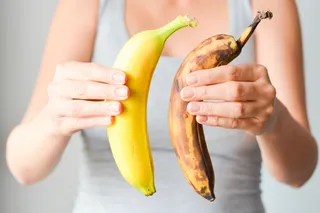
4. A Gene-Edited Banana Stays Yellow Longer and Is a Step Closer to Grocery Store Shelves

(Image Credit: Eviart/Shutterstock)
Slice a banana into a lunchbox at 8 a.m., and by lunchtime it has turned brown and soft. A Norwich company says it has made a non-browning banana, one that stays firm and yellow after peeling and slicing.
Read More: A Gene-Edited Banana Stays Yellow Longer and Is a Step Closer to Grocery Store Shelves
5. A Sperm Whale Sank a Yacht in the South Pacific, Recalling the Real-Life Story Behind Moby-Dick
First came a thud. Then the boat shifted sideways. Suddenly, the sailors on board spotted the culprit — a pod of sperm whales. At this moment aboard Tai Tam, a 52-foot yacht, seawater began pouring through the damaged hull. Hundreds of miles from land in the South Pacific, four people began a desperate effort to keep their boat afloat.
Read More: A Sperm Whale Sank a Yacht in the South Pacific, Recalling the Real-Life Story Behind Moby-Dick
6. 5 Infections, Including Epstein-Barr Virus, Were Linked to 2.3 Million New Cancer Cases in 2024
Epstein-Barr virus lives in nearly every adult on Earth, usually without causing any trouble. When it does lead to cancer, which cancer seems to depend on where you live. In Southeast Asia, it’s mostly tumors in the part of the throat behind the nose. In Europe and the Americas, it’s more often stomach cancer or lymphoma.
Read More: 5 Infections, Including Epstein-Barr Virus, Were Linked to 2.3 Million New Cancer Cases in 2024