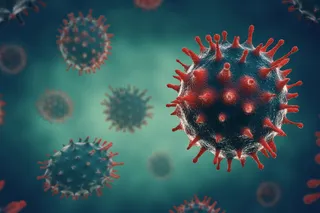
Although research continues to make progress, finding a cure for human immunodeficiency virus (HIV) remains one of modern medicine’s greatest challenges. The virus can permanently insert its genetic code into human cells, creating dormant viral reservoirs that can evade detection and survive treatment.
Antiretroviral therapy (ART) can keep HIV from multiplying, but it doesn’t eliminate these hidden reservoirs. Once treatment stops, the virus can start spreading again. To tackle this problem, researchers at the University of California, Davis, tested an experimental antibody designed to target immune cells that HIV can infect in monkeys.
The study, published in Nature Microbiology, found that some treated animals remained free of detectable viruses in their blood for months, with one showing no rebound for up to four years after ART ended. Although the experiments used simian immunodeficiency virus (SIV), a related virus that infects monkeys, the findings point to a potential new approach to HIV treatment.
How HIV Hides in Cells
HIV can enter immune cells using a surface protein called CCR5, then insert its genetic material into their DNA. Some infected cells become dormant, forming a latent viral reservoir that can persist even when ART controls the infection. Because these cells produce little to no virus, they can escape both medication and immune detection.

 Explore All Options
The researchers developed an antibody that binds to CCR5 and CD3, a protein complex found on specific immune cells that coordinate immune responses. By bringing these cells into contact with CCR5-bearing cells, the antibody encourages the immune cells to attack them.
This could help eliminate infected cells while also removing potential targets for future infection. The strategy builds on evidence from rare cases in which stem-cell transplants performed to treat cancer have led to lasting HIV remission.
Read More: Glioblastoma Is the Most Aggressive Brain Cancer and May One Day Be Treated With a Common HIV Drug
Antibody Made HIV Undetectable for Four Years
To test their experimental antibody, the research team infected 20 newborn rhesus macaques with SIV. The animals began ART one week after exposure and were divided into three groups. One received medication alone, another received medication alongside a single dose of the CCR5/CD3 antibody, and the third received an antibody targeting CD4, another immune-cell protein.
After 18 weeks, the researchers stopped ART to see if the virus returned. In every animal receiving medication alone, the virus reappeared in the blood within a week. Six of eight animals given the CD4-targeting antibody also experienced a rebound within seven days, although one remained without detectable virus throughout follow-up.
The results were more encouraging in the CCR5/CD3 group. Some animals remained free of the viral rebound for months, with two experiencing a rebound after 97 and 173 days. Another showed no rebound before follow-up ended at 29 weeks. The longest followed animal remained free of detectable virus for up to four years.
A Promising Lead to Cure HIV
Further testing suggested that the treatment substantially reduced the viral reservoir. The team found close to no viral genetic material in the tissues they examined and couldn’t recover infectious virus from lymph node cells. However, remission doesn’t necessarily mean the infection has been eliminated.
There are also important limitations. The study involved relatively few animals, and treatment began soon after infection. Newborn monkeys were chosen partly because their immune system can replenish cells quickly, so the results may not translate directly to adults or people living with HIV for years.
The antibody also targets uninfected immune cells, raising questions about how it might affect the body’s ability to fight other infections. Although the animals generally tolerated treatment, with mild reactions disappearing within hours, its safety and effectiveness in humans remain unknown. For now, the findings offer a promising lead rather than a cure.
Read More: FDA Approves Breakthrough HIV Drug, but It Could Be Hard to Access
The content of this article is not intended to be a substitute for professional medical advice, diagnosis, or treatment. Always seek the advice of qualified health providers with questions you may have regarding medical conditions.
Article Sources
Our writers at Discovermagazine.com use peer-reviewed studies and high-quality sources for our articles, and our editors review for scientific accuracy and editorial standards. Review the sources used below for this article:
- This article references information from a study published in Nature Microbiology: SIV reservoir depletion and clearance from neonatal macaques following transient CCR5 depletion