The Diamantina Zone is a deep trench in the southeastern Indian Ocean, remote enough that its floor had never been comprehensively surveyed until a Chinese research vessel made 32 dives into it in 2023.
A study published in Nature documents 476 whale fossil sites and five active ecosystems built around whale carcasses at depths ranging from 15,144 to 22,969 feet (about 4,616 to 7,001 meters), with whale remains so dense that researchers estimate the zone may hold over 10 million carcasses accumulated over at least 5.3 million years. The site sets a new depth record for active whale-fall ecosystems and contains a fossil record stretching back to the Early Pliocene. Researchers are calling it a whale necropolis.
What Is a Whale Fall? How Dead Whales Create Deep-Sea Ecosystems
When a whale dies at sea and sinks to the seafloor, its carcass becomes an ecosystem. The flesh feeds scavengers. The bones, saturated with fats and oils, sustain communities of microbes, worms, and specialized creatures for years. In the deep ocean, where food is limited and life tends to cluster around any available energy source, a whale carcass is significant.
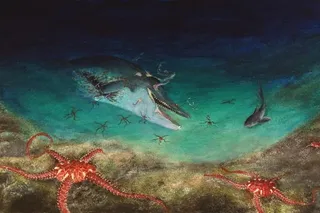
Most known whale falls have been found at depths shallower than 13,123 feet ( about 4,000 meters). The Diamantina Zone extends that record. One active site, three beaked whale vertebrae at 22,270 feet (about 6,789 meters), is the deepest active whale-fall ecosystem ever recorded. Another contained the remains of an Antarctic minke whale roughly 16 feet (5 meters) long, its bones still supporting brittle stars, bone-boring worms, and clams that feed on the chemical energy released by decaying bone rather than on sunlight.

 Explore All Options
Three brittle star species found at the site appear to live exclusively on whale bones, and a sea daisy, a small disc-shaped animal previously known only from sunken wood and hydrothermal vents, was found living on whale bones at nearly 23,000 feet, deeper than any of its kind had ever been recorded.
Read More: If Managed Properly, Whale and Dolphin Carcasses Can Benefit Coastal Ecosystems
The Diamantina Zone Holds Millions of Years of Whale Remains
Among the remains, researchers identified living beaked whale species alongside extinct ones, including a newly described species named Pterocetus diamantinae. The zone has apparently been receiving whale carcasses continuously since before modern humans existed.
Beaked whales use the area as a foraging ground, and some likely die during deep dives. The trench's V-shape funnels sinking carcasses toward the floor. Because sediment accumulates slowly here, bones stay exposed much longer than they would elsewhere, which accounts for both the density and the preservation.
The carbon stored in those bones is substantial. The researchers estimate the zone holds around 6.7 million tons of carbon locked in whale fat and bone, an amount equivalent to roughly 4,700 years' worth of the steady rain of dead organisms and particles that drifts down from the ocean surface to the seafloor.
Whale Bones May Help Deep-Sea Species Travel Across the Ocean Floor
The species found living on these bones overlap with those found at hydrothermal vents and cold seeps, environments powered by chemical energy rather than sunlight. That overlap supports the idea that whale falls act as stepping stones across the deep ocean floor, allowing species to spread between isolated environments that would otherwise be unconnected.
The researchers describe the Diamantina Zone as a possible corridor linking these chemical-energy ecosystems across the southeastern Indian Ocean. Whether comparable sites exist elsewhere remains unknown. But the zone suggests that the deep seafloor is more connected and more alive than it appears from the surface.
Read More: The Mysterious Spade-Toothed Beaked Whale Had Always Avoided Humans — Until Now
Article Sources
Our writers at Discovermagazine.com use peer-reviewed studies and high-quality sources for our articles, and our editors review for scientific accuracy and editorial standards. Review the sources used below for this article:
- This article references information from a study published in Nature: A 5.3-million-year-old deep-sea whale necropolis in the Diamantina Zone