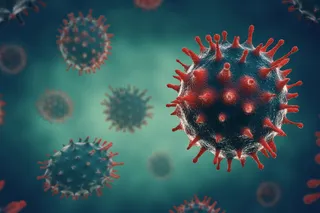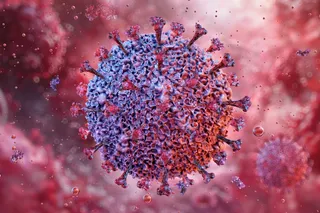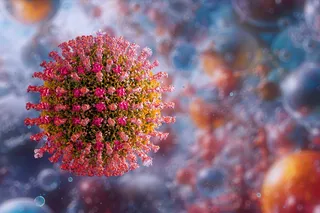


It has almost been a month since officials at the World Health Organization (WHO) were alerted to a (then) unknown illness – now confirmed as Ebola – in the Ituri Province of the Democratic Republic of the Congo (DRC). Laboratory results have since confirmed the virus responsible is the Bundibugyo virus, a rare strain linked to just two previous outbreaks.
Though the outbreak remains centered on Ituri Province, cases and at least one fatality have occurred in the neighboring country of Uganda.
Officials are continuing to tackle the situation by enforcing measures such as surveillance, contact tracing, and case management, while maintaining effective communication and relationships to improve community trust, according to the WHO.
But what exactly is the Bundibugyo ebolavirus, and how does it differ from other strains?
The Different Strains Of Ebola
Ebola is a zoonotic disease transmitted through contact with infected animals, which may include fruit bats. Once it has spilled into the human population, the virus can spread from person to person through contaminated bodily fluids.
The strain behind the majority of outbreaks — including an exceptionally deadly one in the mid-2010s — is the Ebola virus (Orthoebolavirus zairensis). According to the WHO, 11,325 people died after contracting the Ebola virus disease (EVD) between 2014 and 2016.

 Explore All Options
There are three other strains known to cause illness in humans, including the Bundibugyo virus (Orthoebolavirus bundibugyoense), the Sudan virus (Orthoebolavirus sudanense), and the Taï Forest virus (Orthoebolavirus taiense). According to the CDC, the latter is responsible for just one known incident in 1994.
Read More: A Lyme Disease Vaccine Could Soon Be Available — Here's How to Prevent the Disease Until It's Ready
What Are The Symptoms Of Bundibugyo Virus Disease?
The Bundibugyo virus causes Bundibugyo virus disease (or BVD), a very rare but severe form of Ebola.
“From a symptomatic standpoint, the presentation is still going to be very similar to most other cases of Ebola virus,” Dr. Jonathan Dyal, Assistant Professor of Emergency Medicine and Associate Director for Global Health Security, Center for Global Emergency Care at Johns Hopkins, told Discover.
Early signs of infection can include fevers, body aches, and malaise. As the disease progresses, patients can develop gastrointestinal issues, including severe diarrhea, vomiting, and abdominal pain, which can lead to potentially fatal levels of dehydration. Patients may also experience organ failure.
While Ebola does sometimes cause bleeding in the stool or vomit, this is less common in cases involving BVD, according to the WHO.
Ebola patients become contagious only after symptoms appear, following an incubation period that can last between 2 and 21 days.
What Are The Fatality Rates For BVD?
Based on information from previous outbreaks — Uganda in 2007 and DRC in 2012 — fatality rates for BVD are estimated to be between 30 and 50 percent, per the WHO. EVD, in contrast, is thought to be fatal up to 90 percent of the time if not treated, according to the CDC.
As of May 31, 2026, there have been 282 confirmed cases and 22 suspected cases in the DRC, along with 42 confirmed deaths. In Uganda, there are nine confirmed cases and one probable case, along with one confirmed death and one probable death.
“One of the hardest things about this outbreak is that it seems to have gone undetected, or at least under-recognized, for some time before it was brought to international attention,” said Dyal. “The virus has had a bit of a head start.”
How Is BVD Treated?
One key difference between BVD and EVD is that there are currently no approved vaccines or therapeutics for BVD. However, urgent medical care can be crucial.
“The health workers who are directly on the front lines and providing clinical care to these patients, and the public health officers and employees who are really trying to tackle this outbreak, are some of the most selfless and dedicated and hardworking professionals that I know,” said Dyal.
Are There Any Vaccines In The Works?
Yes. On June 1, 2026, the Coalition for Epidemic Preparedness Innovations (CEPI) announced it would accelerate the development of three vaccine candidates to begin clinical trials as quickly as possible.
Dyal is hopeful about the potential of treatments and vaccines to lessen the impact of future outbreaks of Bundibugyo, citing the effectiveness of treatments directed at EVB.
This article is not offering medical advice and should be used for informational purposes only.
Read More: Why Bats Are Breeding Grounds for Deadly Diseases Like Ebola and SARS
Article Sources
Our writers at Discovermagazine.com use peer-reviewed studies and high-quality sources for our articles, and our editors review for scientific accuracy and editorial standards. Review the sources used below for this article:
- This article references information from the World Health Organization: Bundibugyo virus disease outbreak
- This article references information from the World Health Organization: Ebola West Africa, March 2014-2016
- This article references information from the CDC: History of Ebola Outbreaks
- This article references information from the CDC: Ebola Outbreak: Current Situation
- This article references information from the World Health Organization: Ebola disease caused by Bundibugyo virus, Democratic Republic of the Congo & Uganda
- This article references information from the Coalition for Epidemic Preparedness Innovations (CEPI)