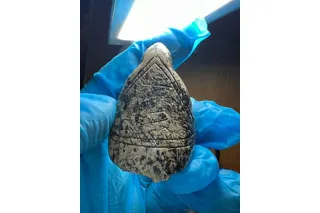
Among the words still legible on a broken clay tablet from Türkiye are references to people who fled their country and homes that were not to be destroyed. After about a year of study, researchers identified the fragment as part of a copy of the Kadesh Peace Treaty, an agreement between an Egyptian pharaoh and a Hittite king.
The agreement between Ramesses II and Hattusili III dates to 1258 B.C.E., roughly 3,300 years ago, according to World History Encyclopedia. Scholars widely consider it the world’s oldest surviving peace treaty. The newly identified fragment comes from Hattusha, the Hittite capital in what is now Çorum province, and contains lines about how the two countries should treat people fleeing across their border, according to the Turkish Ministry of Culture and Tourism.
"We have found traces of peace, thousands of years old, in the soil of Anatolia,” culture and tourism minister Mehmet Nuri Ersoy said in a translated press release.
Reading the Kadesh Peace Treaty
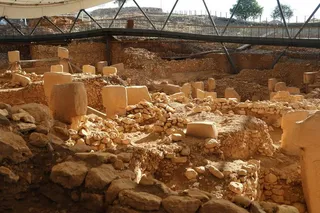
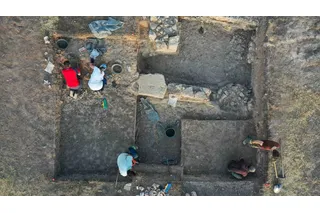
Excavators found the fragment near a building archaeologists call Building E in Büyükkale, the part of Hattusha where the royal palace stood. One face of the inscribed clay survived.
The inscription is in Akkadian, a language used for diplomacy, written in wedge-shaped cuneiform signs. Researchers traced the fragment to the front of one of the treaty’s clay copies. The words still readable belong to sections numbered 12 through 20, which address people fleeing Egypt or Hatti, the Hittite kingdom.

 Explore All Options
Under the wider agreement, people who fled into the other kingdom were to be sent back, according to a translation published in Ancient Near Eastern Texts Related to the Old Testament. But the treaty also forbade killing or injuring people sent back, destroying their homes, or harming their wives and children.
Those protections were already known from surviving versions of the agreement. According to the ministry, the new fragment helps researchers reconstruct the clay copies preserved at Hattusha.
Read More: A Team of Archaeologists Saved 30,000 Artifacts During the Peak of Syria’s Civil War
How Two Rival Kings Made Peace
After years of fighting, the two rulers agreed to treat each other as equals. That was unusual among surviving Hittite treaties, which typically placed the Hittite king above the other ruler, according to Egyptologist Anthony Spalinger in a 2019 interview with World Literature Today.
The agreement also spelled out what each king owed the other. According to the treaty translation, neither kingdom would invade the other’s territory, and each promised military support if the other faced an attack.
Translators helped the two courts understand each other, while scribes used Akkadian to write down the agreement. The original treaty documents were written on silver; the surviving clay tablets and Egyptian hieroglyphic inscriptions are copies, Spalinger explained.
Looking for the Missing Pieces
The Egyptian version survives on temple walls, while fragments of Akkadian copies began turning up during excavations at Hattusha between 1906 and 1912. Earlier finds are now held in museum collections in Istanbul, Ankara, Berlin, and St. Petersburg, according to the ministry.
The treaty was among thousands of documents the Hittites kept. According to UNESCO’s Memory of the World listing, nearly 25,000 tablets make up the archive from Hattusha, also known as Boğazköy, recording everything from trade and law to religion and military affairs. Excavations at Büyükkale are continuing, with researchers hoping to find more missing pieces of the treaty.
The people fleeing across the border were unlikely to read those promises themselves. Only authorized officials had access to Hattusha’s archives, Assyriologist Veysel Donbaz explained in the same World Literature Today interview. How much the people being sent home knew about the promises meant to protect them is less clear.
Read More: Severe Droughts May Have Helped Drive the Late Bronze Age Collapse
Article Sources
Our writers at Discovermagazine.com use peer-reviewed studies and high-quality sources for our articles, and our editors review for scientific accuracy and editorial standards. Review the sources used below for this article:
- This article references information from World History Encyclopedia: The Battle of Kadesh & the First Peace Treaty
- This article references information from World Literature Today: The Kadesh Peace Treaty and Translating Peace: A Conversation with Anthony Spalinger and Veysel Donbaz
- This article references information from a translation published in Ancient Near Eastern Texts Related to the Old Testament: Treaty Between the Hittites and Egypt
- This article references information from UNESCO: The Hittite Cuneiform Tablets from Boğazköy