

Lyme disease is a serious condition caused by the bacterium Borrelia burgdorferi. It’s contracted from the bite of black-legged ticks, known as deer ticks, that carry the bacteria, according to the Mayo Clinic. The illness, which can lead to serious nerve issues, joint pain, and cardiovascular concerns, occurs in almost every state in the U.S., though it’s most common in the Northeast and Midwest. Vermont, Maine, and Rhode Island have the most cases in the U.S., according to the Centers for Disease Control and Prevention (CDC).
The number of people who contract the condition is around 476,000 per year, and that number is growing due to a changing climate, a growing deer population, and humans moving into natural habitats where they’re more likely to be exposed to the bacteria, per Johns Hopkins.
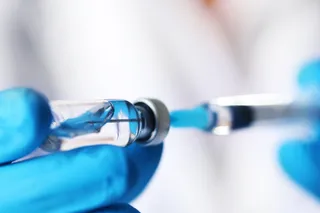
Researchers have been on the hunt for a Lyme disease vaccine for decades, and now Pfizer and Valneva have developed a vaccine that has shown some effectiveness in Phase 3 trials but has not yet been approved.
How the Lyme Disease Vaccine Works
The new Lyme disease vaccine works by getting to the heart of the problem — the phase in the tick’s lifecycle when the bacteria are transmitted. The Lyme disease bacterium, Borrelia burgdorferi, is an obligate parasite, which means it requires an animal host to be carried and transmitted. Ticks aren’t born carrying the bacteria; they get it by biting an animal, such as a rodent, bird, deer, or dog, that does carry it, then biting a human and passing it on, according to the National Science Foundation.

 Explore All Options
The vaccine, designed to prevent tick-borne transmission to humans, targets six strains of B. burgdorferi. During infection, the tick attaches to a human and ingests a blood meal, which signals to the bacteria to move from within the tick’s gut to the tick’s salivary glands and then into the human host, Thomas A. Russo, chief of Infectious Disease at the Jacobs School of Medicine at the University of Buffalo, told Discover.
“It’s a process, which is why those who find a tick that’s been attached for 24 to 48 hours are unlikely to develop Lyme disease,” Russo said. He adds that we’re more concerned when the tick has been attached for longer because of its life cycle.
Russo said the new vaccine is clever because it targets the heart of transmission. When blood is ingested from the vaccinated human host, the antibodies against the bacteria will kill the bacteria before they move from the tick’s gut to its salivary glands.
“It’s a clever use of the biology in terms of vaccine design,” Russo told Discover.
Read More: As Lyme Disease Cases Grow, Treatment Makes Progress to Stop Infection
The Effectiveness of the Vaccine
In its first Phase 3 trials, the vaccine reduced the risk by about 73 percent effectiveness. Russo contends that while a higher percentage would be desirable, this is a pretty good start. And to put things in context, this means that around 30 percent of people who are vaccinated may contract Lyme disease, but we don’t know whether those who were vaccinated end up with the more serious complications of Lyme disease, including neurological issues, joint pain, and heart conditions.
“Perhaps the vaccine still mitigates these complications,” Russo told Discover.
What we need to know in upcoming trials is whether the vaccine prevents serious disease in those who still contract the virus, similar to an influenza or COVID vaccine.
What’s more, given the illness's growth and spread, even a 73 percent reduction could prevent a large disease burden. Especially considering that, thus far, the vaccine has had no serious adverse effects.
How to Prevent Lyme Disease Until a Vaccine Is Available
Russo contended that the vaccine holds promise, but he added that there are also a number of steps you can and should take to prevent the disease until a vaccine becomes available, and in addition to taking that vaccine.
- Wear protective clothing from your head to your toes, including hats, long sleeves, and pants, and then tuck your pants into your socks so that ticks can’t get underneath your clothes.
- Wear tick repellent that contains DEET, and perhaps most importantly, spray your clothing with the tick repellent permethrin.
- When you’re coming in from the outdoors, perform daily tick checks and shower immediately after coming inside.
- Check pets daily for ticks.
- Put the clothes worn outside in the dryer for 15 minutes to kill any potential ticks.
- If a rash appears, take a picture of it and call your doctor immediately.
This article is not offering medical advice and should be used for informational purposes only.
Read More: The Blurred Line Between Lyme Disease and Mental Illness
Article Sources
Our writers at Discovermagazine.com use peer-reviewed studies and high-quality sources for our articles, and our editors review for scientific accuracy and editorial standards. Review the sources used below for this article:
- This article references information from the Mayo Clinic: Lyme disease
- This article references information from the Centers for Disease Control and Prevention: Lyme Disease Case Maps
- This article references information from the Johns Hopkins Medicine Lyme Disease Research Center: Lyme Disease
- This article references information from Pfizer: Pfizer and Valneva Announce Lyme Disease Vaccine Candidate Demonstrates Strong Efficacy in Phase 3 VALOR Trial
- This article references information from the National Science Foundation: Fighting the spread of Lyme disease
- This article references information from the Johns Hopkins Medicine Lyme Disease Research Center: Lyme Disease Prevention and Tick Removal