A Long-Lost Megalodon Fossil Found, The Strange Minds That May Exist in the Universe, and a Blood Test That Could Detect Over 50 Types of Cancer
Discover the top stories from June 27 to July 2, 2026, including the return of a long-lost Megalodon fossil and a new blood test that could detect cancer from a single sample.
Jenny Lehmann is an Associate Editor at Discover Magazine who writes articles on microbiology, psychology, neurology, and zoology, and oversees the Piece of Mind column of the print issue.
Missed some of our top stories from the week? Check out our round-up below, covering the biggest science news and stories that matter.
For this week's stories, from June 26 to July 2, 2026, we're covering a long-lost Megalodon fossil that confirms the giant shark's length, the potential creation of a "StormWall" to protect Earth from solar storms, how consciousness may exist in different forms across the universe, the surprising potential of marigolds as the next superfood, a look at a famous female shaman from the Middle Stone Age, and a new blood test that researchers claim can detect over 50 forms of cancer.
1. Long-Lost Megalodon Fossils Confirm the Giant Shark Could Reach 80 Feet Long
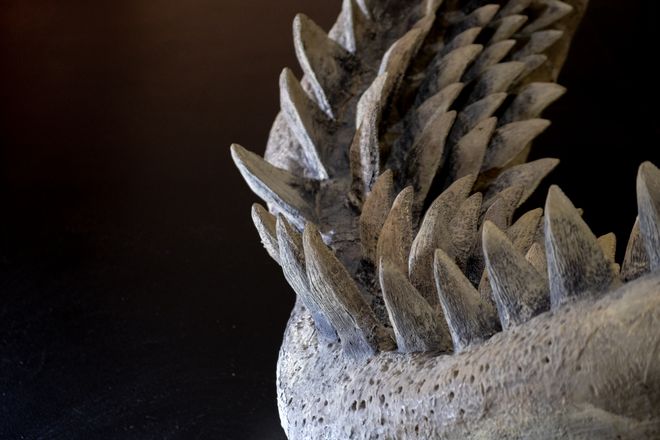
Replica Tegalodon teeth, not associated with this study (Image Credit: ilikeyellow/Shutterstock)
In the 2018 film The Meg, a 75-foot shark terrorizes the ocean. The actual science behind that number, the research that established how large Megalodon could really grow, rested on a single set of vertebrae dug out of a clay pit in Gram, Denmark, in the late 1970s. But when researchers moved the specimen out of its original research lab after publication, it was misplaced, leaving behind only photographs.
2. A "StormWall" Could Shield Earth From Devastating Solar Storms
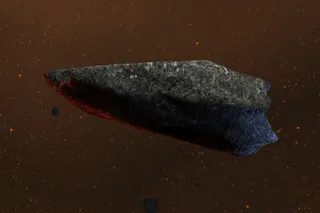
Researchers are asking how we can fortify Earth against solar storms' most severe side effects. A new paper describes a system named “StormWall,” which involves flinging chemicals into the outer edges of the planet’s geomagnetic field in order to provide a temporary shield that deflects extreme space weather.
3. The Universe May Contain Minds Stranger Than We Can Imagine
Think of Scarlett Johansson’s character Samantha in the movie Her or Rocky, the lovable alien in Project Hail Mary. Neither was made of flesh, blood, and tissue, but code and algorithms (Samantha) and oxidized metals and a crystallized brain (Rocky).
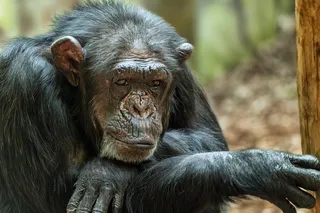
It may be time to expand our idea of what consciousness could look like and ditch assumptions that it must be similar to what we see on Earth.
4. Marigold Petals May Contain as Much Protein as Some Grains, Plus the Amino Acid Behind Umami
(Image Credit: pote-poteco/Shutterstock)
A new study found that marigold petals contain protein in a range roughly comparable to that of wheat, oats, corn, and quinoa. The protein stays stable at higher baking temperatures than chickpea or pea protein, and one of its most abundant compounds is the amino acid behind umami, the savory taste found in foods like soy sauce and aged cheese.
5. Skeletal Clues of a 9,000-Year-Old Woman Shaman Show How She Induced Ecstatic Behavior During Spiritual Rituals
In 1934, workers digging trenches for sewer construction in Bad Dürrenberg, Germany, made a surprising discovery: a human skeleton adorned with a variety of animal bones and teeth.
Today, the remains are known as the Bad Dürrenberg shaman, a site that is not only one of the oldest burials in central Germany but also gives a detailed insight into why we believe in her spiritual significance and the lives of hunter-gatherers after the last Ice Age — all based on the burial objects and an unusual medical condition revealed by her skeleton.
6. A Blood Test Could One Day Detect Over 50 Types of Cancer — What That Means for Cancer Care
What if you could detect early-stage cancer with a single blood test? A new screening tool claims to do exactly that by picking up abnormal DNA fragments circulating in the bloodstream.
Anastasia Scott is an Assistant Editor at Discover Magazine. Her work focuses on bringing clarity and creativity to scientific ideas. View Full Profile
Rosie McCall is a London-based freelance writer who frequently contributes to Discover Magazine, specializing in science, health, and the environment.View Full Profile
Jenny Lehmann is an Associate Editor at Discover Magazine who writes articles on microbiology, psychology, neurology, and zoology, and oversees the Piece of Mind column of the print issue.View Full Profile








 Explore All Options