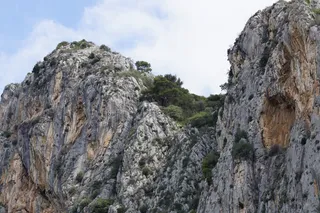
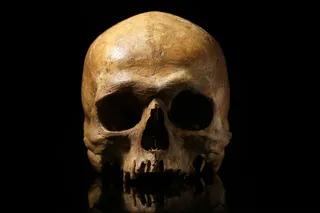
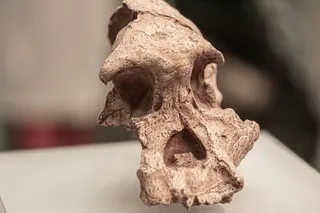
Among the Homo naledi fossils recovered from South Africa's Rising Star Cave, one individual stood out. Larger than the others, with a bigger skull and more robust build, it had been informally nicknamed Neo and was considered the most likely male in the collection. When researchers analyzed the proteins in its tooth enamel, no male markers came back.
Neither did any of the other individuals tested. A new study published in Cell analyzed ancient proteins extracted from H. naledi teeth and found no male markers in the group. Every individual tested appeared to be female, or possibly male, with a mutated or deleted sex-linked gene. The finding raises the possibility that the Dinaledi Chamber of the Rising Star Cave may be the first known sex-specific burial site created by a non-modern human species.
“The lack of male markers with the group is truly fascinating. It is incredibly exciting to gain a window not only into the biology of our ancestors, but also into how they lived,” said co-author Marc Dickinson in a press release.
H. naledi Fossils From Rising Star Cave Show No Male Markers
When the first H. naledi fossils were recovered from the cave in 2013, there was barely any size variation between individuals or physical differences typically seen between males and females of the same species.

 Explore All Options
The species, which lived between approximately 335,000 and 241,000 years ago, had small brains and ape-like shoulders alongside more human-like hands and lower limbs.
Ancient DNA degrades quickly in warm climates, making genetic recovery from South African fossils effectively impossible. But proteins in tooth enamel survive longer, shielding biological information from environmental contamination for millions of years.
“This makes them ideal carriers of genetic information from deep time,” said lead author Palesa Madupe.
In the new study, researchers analyzed ancient proteins from 23 teeth representing at least 20 H. naledi individuals. Using a minimally destructive acid etching technique, the research team pressed each tooth briefly against a drop of acid, releasing protein fragments locked inside the enamel.
They then analyzed those proteins for amelogenin-Y, a marker uniquely produced by the male Y chromosome. The male marker was absent in every sample. Researchers at the University of York's specialized chemistry facility confirmed the proteins were genuinely ancient and not the result of modern contamination.
“Our study helps in the long-standing mystery of why Homo naledi lacked significant variation; it’s probably because they could have all belonged to one sex,” said Madupe.
A Female Burial Site or a Rare Genetic Trait
If the Rising Star Cave system was reserved exclusively for females, it would point to symbolic mortuary practices previously thought unique to modern humans. A deliberate, sex-specific burial site created by a small-brained species that predates modern human cognitive development would revise what we know about the social capabilities of H. naledi.
Alternatively, H. naledi may have been a highly isolated population in which the male-specific amelogenin-Y gene mutated or was deleted entirely, as has been rarely observed in modern human populations. In that case, males may have been present, but their teeth would carry no detectable male signature.
Of the 20 individuals included in the final sex-attribution analysis, 19 were confidently identified as female with a probability above 95 percent. The remaining individual's profile was also consistent with female attribution, though with lower certainty.
“These findings offer rare insights into a culture that has, until now, been difficult to access directly. Advances in ancient protein analysis are opening the door to a far richer and more nuanced understanding of ancient hominins,” Dickinson said in the press release.
Whether the cave was a deliberate female burial ground or the result of an unusual genetic trait, the Rising Star Cave is no longer simply a place where H. naledi remains were found. It is a place that may say something about how they lived.
Read More: Ancient Tooth Proteins Reveal Possible Link Between Homo erectus, Denisovans, and Modern Humans
Article Sources
Our writers at Discovermagazine.com use peer-reviewed studies and high-quality sources for our articles, and our editors review for scientific accuracy and editorial standards. Review the sources used below for this article:
- This article references information from a study published in Cell: Proteomic analysis of dental enamel from 20 Homo naledi individuals shows no male markers