

Fossilized teeth from the Prince Creek Formation in the Arctic Circle have been assigned to three newly identified mammal species that likely walked among dinosaurs about 73 million years ago.
The findings, published in the Proceedings of the National Academy of Sciences (PNAS), suggest that these small, rodent-sized mammals — ranging in size from a mouse to a rat — once lived in what is now northern Alaska and may have settled in the area after traveling from what is now modern-day Mongolia.
“While the polar regions don’t host the same level of biodiversity as the tropics, they were still very active places for life to flourish, extending far back into deep time,” said first author Sarah Shelley from the University of Lincoln in the U.K., who conducted the study at Colorado University Boulder with senior study author Jaelyn Eberle, in a press release.
These newly identified species could help rewrite our understanding of the role of Arctic regions in evolution and offer new insights into prehistoric biodiversity.
Read More: Prehistoric Mammals' Dark Fur Was Key to Survival
The Longest Living Mammals

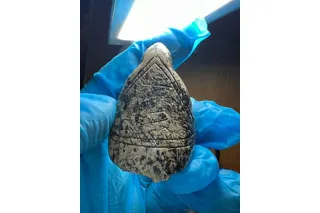
Camurodon borealis premolar
(Image Courtesy of Shelley et al)
After analyzing the fossilized teeth, Shelley, Eberle, and other members of the research team concluded that the three species are part of the extinct group multituberculates, one of the longest-living groups of mammals to ever walk the Earth.

 Explore All Options
This group lived for more than 100 million years, according to the press release, stretching from the Jurassic Period until the late Eocene Epoch some 35 million years ago. They were even among the survivors of the asteroid impact that led to the mass extinction of non-avian dinosaurs.
These newly identified species likely lived during the Late Cretaceous Period and thrived in the harsh Arctic environment, which, back then, still experienced freezing temperatures, potential food shortages, and months of darkness, even if it may have been warmer than today. However, these tiny creatures adapted and thrived. This discovery sheds light on the biodiversity of this region during prehistoric times.
“These three new mammal species add to a growing body of evidence that this ancient arctic region was home to unique, polar-adapted species,” said Patrick Druckenmiller, a coauthor at the University of Alaska Fairbanks, in a press release.
What Teeth Can Tell Us About Survival
Multituberculates have long puzzled scientists, who often wonder what helped these mammals survive for as long as they did. These teeth could help fill in pieces of this evolutionary mystery.
The team named the species Camurodon borealis, or Northern curved-tooth; Qayaqgruk peregrinus, or the little wandering hero; and Kaniqsiqcosmodon polaris, or polar frost ornamented tooth. They noted that all the teeth had markedly different shapes, suggesting they likely relied on different food sources.
While C. borealis’ teeth resembled those of an herbivore, Q. peregrinus and K. polaris’ teeth resembled omnivore teeth, and they likely ate both insects and some plants.
The flexibility in their diets may have allowed these species to coexist at the same time, according to Shelley, and possibly survive the asteroid impact.
“There's a lot of diversity in the multituberculate group. They lived for an incredibly long time, and I think they can reveal a lot about the resilience of mammals, not just to the mass extinction, but also to climatic stresses that many organisms are facing today,” Shelley added in the press release.
Adapting Through Migration
Diet may not have been the only adaptation that led to this species survival. According to the study, Q. peregrinus — which is named after Qayaq, a legendary Alaskan Inuit hero — is closely related to a Mongolian species. The findings suggest that Q. peregrinus may have dispersed from Asia about 92 million years ago, and could be one of the earliest examples of mammals crossing between continents.
“This means there was a land corridor between Asia and North America for these little mammals to come through,” Eberle said in the press release. “And this land bridge was already pretty active as far back as 90 million years ago.”
The evidence from these three species is helping to shift our understanding of what life may have been like all those millions of years ago, from adapting to a changing world and surviving a mass extinction to how ancient animals migrated and settled in new regions. These little teeth have quite a story to tell.
“It really challenges how we think about native species,” Shelley said in the release. “Deep time reminds us that a place is not just a point on a map, but a long, layered history of landscapes and inhabitants.”
Article Sources
Our writers at Discovermagazine.com use peer-reviewed studies and high-quality sources for our articles, and our editors review for scientific accuracy and editorial standards. Review the sources used below for this article:
- This article includes information from a study published in Proceedings of the National Academy of Sciences: Arctic ecosystems shaped mammalian dispersal and diversification before the Cretaceous–Paleogene mass extinction