

Fish fossils from a 62.2 million-year-old Egyptian site may be rewriting what we know about marine evolution and filling in vital gaps in the prehistoric record.
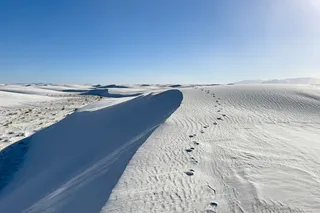
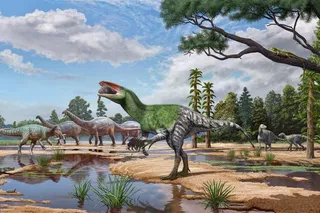
It may be hard to imagine, but Egypt’s golden desert was once mostly covered by seas. Within those seas, a variety of aquatic life lived during the Age of Dinosaurs. And, like the dinosaurs, many of them may have succumbed to the same fate triggered by the Chicxulub asteroid.
The results of the End Cretaceous mass extinction event not only reshaped the flora and fauna on land but also transformed marine life. As devastating as this event was, it may have opened the door for modern fish species to evolve. However, there has been little fossil evidence to paint an accurate timeline of this transition, until now.
Publishing their findings in Science Advances, an international research team may have uncovered a fossil that not only provides evidence for this transition but also reveals that fish communities, similar to modern ones, were already in place some 4 million years earlier than previously confirmed in the fossil record.
Fish Fossil Finds at Qreiya 3 Lagerstätte

Fossil skeleton of the oldest known tuna-related fish
(Image Credit: Professor Hesham Sallam, Mansoura University Vertebrate Paleontology Center)
The study, led by the Mansoura University Vertebrate Paleontology Center (MUVP) in Egypt and in partnership with the University of Michigan and KU Leuven in Belgium, examines fossils from the Qreiya 3 Lagerstätte, a rich fossil site in Egypt's Eastern Desert. The site dates back 62.2 million years and contains marine fossils from the Danian Age — the earliest of the Paleocene.

 Explore All Options
From this site, researchers have uncovered hundreds of fish fossils, including more than 20 ray-finned fish species, making Qreiya 3 one of the most diverse Danian fish fossil assemblages.
“What surprised us most was not just how many fishes the site preserves, but how familiar the community looks in broad outline,” said lead study author Sanaa El-Sayed, a senior student researcher at MUVP, assistant lecturer at Mansoura University, and Ph.D. student at the University of Michigan, in the press release.
“Instead of a fauna still dominated by holdovers from the Cretaceous, we found an assemblage already structured around groups that would later come to dominate the oceans,” El-Sayed added.
Read More: Pivotal Ancient Fish Fossils Mark a Key Turning Point in a Slow Evolution
Historic Lineages and Missing Fish
After analyzing fish fossils from the site, researchers determined that many of the fish belonged to the percomorphs, a marine group that includes popular modern-day fish like flounder and tuna. Some of the fossils also provided some of the earliest skeletal records of the ancestors of modern-day fish, including mackerels, snake mackerels, moonfishes, pipefishes, jacks, and tuna.
“Many fossils from Qreiya 3 can [be] compared bone-for-bone with their living cousins. That shows us that important branches in the fish family tree must have evolved by the Danian,” said coauthor Matt Friedman, director of the Museum of Paleontology and professor of Paleontology at the University of Michigan, in the press release.
While the site contains fossils that are associated with several living fish lineages, some groups are missing. The team noted that some predatory fish groups that were common during the Cretaceous appear to be absent from the site. This leads the team to believe that older fish lineages were likely lost during the mass extinction event, and the modern fish groups rapidly expanded.
A Rare Look at Species Reorganization
From the Qreiya 3 site, the team also gained a rare environmental perspective on the transition. Most other known Danian fish sites are from shallow settings; this site, however, is deeper. At the time, the waters would have ranged from about 492 feet to 820 feet deep. Evidence from the site indicates that the fossils may have been associated with the Latest Danian Event, a short period of warming. The fossils were likely preserved under low-oxygen bottom-water conditions, which are ideal for fossilization.
During the Paleocene, the fossil site would have been a tropical region. The evidence from Qreiya 3 suggests that the early rise of these fish communities may have been more advanced due to the tropical climate, though more study is needed to prove this. However, based on the information the team gathered from this site, they believe they may have one of the most extensive and informative windows yet discovered into how marine ecosystems reorganized after the end-Cretaceous event (K-Pg extinction).
“What we are publishing now is only the beginning of the story,” said senior author Hesham Sallam, professor of vertebrate paleontology at Mansoura University, in the press release. “This study is an initial synthesis from a much broader research effort. Many important specimens are still under preparation and study, and we expect this site to continue transforming our understanding of how modern marine fish faunas became established in the wake of the K–Pg extinction.”
Read More: Living Fossils Like the Coelacanth Have Remained Unchanged for 400 Million Years
Article Sources
Our writers at Discovermagazine.com use peer-reviewed studies and high-quality sources for our articles, and our editors review for scientific accuracy and editorial standards. Review the sources used below for this article:
- This article references information from a study published in Science Advances: Rise of modern marine fishes captured in an early Paleocene Lagerstätte