
#41: Scans Unlock Hidden Life in Vegetative Brains

Discover how vegetative state consciousness measurement using fmri revealed a patient's hidden cognitive abilities after years of silence.

Written byKat McGowan
| 1 min read
Google NewsGoogle News Preferred Source
FMRI scans of the brain show a healthy volunteer answering "yes" to a researcher's question at left and "no" at right, using only the power of thought.Martin M. Monti

Newsletter

Sign up for our email newsletter for the latest science news

Sign Up

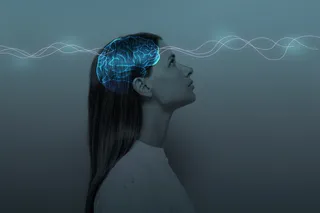
A man believed to be in a vegetative state managed to answer doctors’ questions—using only his thoughts. The startling experiment, described in February in the New England Journal of Medicine, suggests a new way to measure consciousness in brain-injured patients.

Following a traffic accident, the patient had not spoken or made any other intelligible responses for five years before being included a study conducted by Adrian Owen and his team at the Medical Research Council Cognition and Brain Sciences Unit in Cambridge, England. The team tracked the patient’s brain activity using functional magnetic resonance imaging (FMRI) while posing simple questions, such as whether he had a brother. He was asked to imagine walking around his house to indicate yes, and to think about playing tennis to signal no. In a healthy brain, these responses are easy to tell apart on a scan: Tennis activates motor-related brain areas, while navigating activates spatial regions. Using this simple code, the patient answered five of six questions correctly.

Martin Monti, a neuroscientist and lead author of the study, was “blown away” by the data. “We now know this patient has much more cognitive function than we ever imagined,” he says. Monti looks toward the day when fmri can improve diagnosis in disorders of consciousness and search for signs that patients are actually cognizant and alert. In some cases, imaging might also be used to communicate, but Monti thinks this may be rare. Only 5 of 54 patients whom he has studied have been able to do the visualization task at all.

Meet the Author

Published In

Stay Curious

JoinOur List

Sign up for our weekly science updates

View our Privacy Policy

SubscribeTo The Magazine

Save up to 40% off the cover price when you subscribe to Discover magazine.

Subscribe