

After 30 years of research, a shipwreck off the south coast of England has been identified as a 17th-century Dutch trading ship that hit a patch of rough weather while sailing. The ship — named “Dom van Keulen” — sank near Devon, England, on its way back to the Netherlands after departing from Morocco in 1633, leaving behind about 400 gold coins and other intriguing items on the seafloor.
The U.K.-based South West Maritime Archaeology Group first discovered the ship in 1995, but until recently, researchers weren’t sure of the ship’s identity. Its story has now come to light in a book published by the British Museum called “From Morocco to the Coast of England: The Story of the Dom van Keulen and its Remarkable Cargo.” In the book, several researchers detail what happened to the ship and its cargo in 1633, providing insight into the once-dominant Dutch trading empire.
“The discovery of African gold from under the sea off the coast of Devon was an amazing discovery that raised so many questions about how it came to be there,” said Jeremy D. Hill, head of research at the British Museum, in a statement. “Answering those questions has taken a team of experts, working collaboratively. The story can now be told of how a Dutch ship carrying North African gold was wrecked off the English coast, making this a discovery of international importance. It reminds us how much there is still to be found under our seas.”

 Explore All Options
The Wreck of the Dom van Keulen
In autumn 1633, the Dom van Keulen left Morocco with a large variety of goods on board. Its cargo included 150 bags of gum arabic (a gum produced by certain acacia trees), 64 bags of saltpeter (an ingredient in gunpowder), 320 goat skins, and 9,000 Barbary ducats, or gold coins; the coins were largely made in Morocco, which was ruled by the Sa'dian dynasty in the 16th and 17th centuries.

Diver exploring the shipwreck.
(Image Credit: Maritime Archaeology Sea Trust (MAST)/CC)
The journey back to the Netherlands, however, hit a snag when the ship encountered what is described in the book as “much tempestuous weather.” The situation became so perilous that the crew decided to anchor a quarter mile from the shore of the English coastal town of Salcombe, since water had started to leak into the ship. They then abandoned the ship and used its boat to get to shore at Salcombe. Miraculously, not a single person died.
Identifying a 17th-Century Shipwreck
Following the discovery of the shipwreck in 1995, researchers speculated about the ship’s identity. At first, they thought it might have been a pirate ship belonging to Barbary Corsairs, who sailed along the North African coast and engaged in raids on coastal European towns.
However, researchers would eventually discover that the ship was the Dom van Keulen after searching through archival records and finding an account in which two merchants from Amsterdam reported the loss of their ship in December 1633. This account further states how the ship had been sailing from Safi, the main port of Morocco at the time, to Amsterdam. It also mentions the Barbary ducats as part of the ship’s cargo.
Not much else is known about the Dom van Keulen in terms of its appearance or size. But researchers have determined what the ship was carrying by investigating the wreck site, which is almost 100 feet long. There, they've found cannons, anchors, and a plethora of smaller cargo items.
Salvaging Precious Cargo
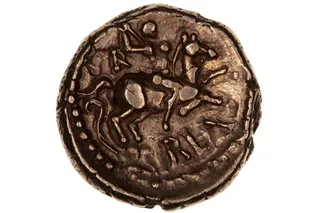
It’s believed that the ship’s crew salvaged most of the cargo, but they couldn’t save the more than 400 coins that sank to the seafloor along with the ship.

Example of gold coins from the shipwreck.
(Image Credit: British Museum/CC)
These coins have since been recovered and are now housed at the British Museum, alongside other material that originated from the Barbary Coast, recognized today as Morocco. Other recovered items include a pewter bowl and spoon, gold jewelry, a sounding weight in the shape of a fish, a stamp seal, pottery, and a gold finger nugget.
The gold coins from West Africa were valued by 16th and 17th-century Dutch merchants, who would bring them back to the Netherlands to be melted down and transformed into their own Dutch gold coins.
“This provides important context for the wealth and architecture of the Sa‘dian Sharifs, the trade in African gold, and tangible evidence of the flourishing 17th-century maritime trade linking Morocco, the Low Countries, and Britain,” said David Parham, a professor of maritime archaeology at Bournemouth University.
Read More: 2,200-Year-Old Ancient Roman Shipwreck Uncovers Hidden Repairs Across the Adriatic
Article Sources
Our writers at Discovermagazine.com use peer-reviewed studies and high-quality sources for our articles, and our editors review for scientific accuracy and editorial standards. Review the sources used below for this article:
- This article references information from a book: From Morocco to the Coast of England: The Story of the Dom van Keulen and its Remarkable Cargo