

Mass graves, large fortifications, and a collection of cuneiform tablets, all dating back almost 4,000 years, are evidence of siege warfare in northern Iraq. According to archaeologists working at the site, the age of the artifacts found at Kurd Qaburstan, 14 miles (22 kilometers) southwest of Erbil, aligns with the siege and subsequent fall of the Bronze Age city, Qabra.
While Qabra’s existence has been documented in ancient records, its physical location remained something of a mystery. Archaeologists have suspected Kurd Qaburstan could be that location, and these new findings provide evidence to support that theory.
“The charred debris, the large number of ceramic vessels and individuals who met untimely deaths and were buried in the destruction layers, provide the clearest archaeological case of Middle Bronze Age siege warfare yet discovered in northern Mesopotamia,” Tiffany Earley-Spadoni, associate professor of history at the University of Central Florida and director of the Kurd Qaburstan project, said in a statement.
Evidence of Bronze Age Conflict
The discoveries at Kurd Qaburstan, in the Kurdistan region of Iraq, come off the back of two excavations — one in 2024 and one in 2025.

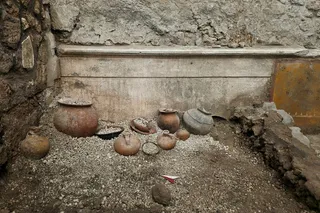
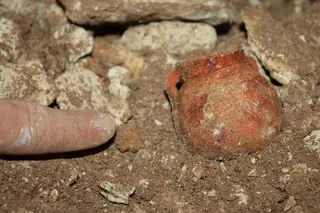
Broken vessels and debris from the 2025 Kurd Qaburstan results destruction deposit.
(Image Credit: Edward Dandrow/Kurd Qaburstan Project)
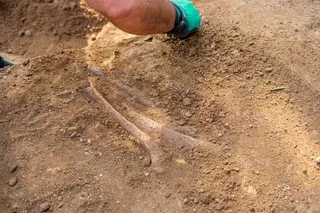
Archaeologists found collapsed structures along with broken vessels and other debris, which they say suggest a period of prolonged assault. The team also discovered the remains of 17 bodies. These do not appear to have been formally buried, again pointing to conflict.

 Explore All Options
Earley-Spadoni said the dead may have been palace workers, many of whom seem to have been left where they died. This includes one who was positioned face down over a stone basin.
A “Snapshot” of Palace Life
Discoveries at the site hint at the complexity of urban life at Qabra before the siege. Archaeologists uncovered over a hundred administrative sealings and twenty cuneiform tablets, which appear to be palace administrative records. These include lists of commodities, such as ingredients needed to make beer. One is a letter thought to mention a high-ranking official named Mutu-Kumri.
These “provide a snapshot of palace life and the economy of the ancient city,” Earley-Spadoni said. The inscriptions may also reference the siege itself. “Several tablets are dated within days of each other, matching the timeline of the city’s fall,” Earley-Spadoni added.

Cuneiform tablet from the Lower Town East palace.
(Image Credit: Carmen Gütschow/Kurd Qaburstan Project)
The Fall of Qabra
Qabra is thought to have been a major hub in ancient Mesopotamia before it was captured by the kings Shamshi-Adad of Assyria and Dadusha of Eshnunna — an event recorded in two stone slabs, one being the Victory Stele of Dadusha. It has been suspected that the archaeological site Kurd Qaburstan is the ancient walled city Qabra, and these new findings add more weight to that theory.
The site is 118 hectares and comprises a walled lower city and a central mound. It is thought that the city would have been inhabited during the Middle Bronze Age, approximately 4,000 years ago. According to John Hopkins, it lies in a strategic position halfway between the Upper and Lower Zab rivers.
Excavating an Ancient City
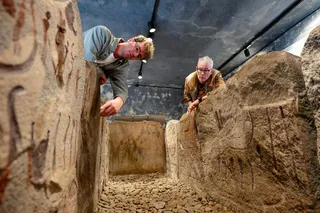
Surveys of the site reveal a large wall, complete with bastions, that surrounds Kurd Qaburstan and remains buried to this day. These fortifications, archaeologists say, match those found on the Victory Stele of Dadusha.
During the excavations, archaeologists also discovered a street complete with a drainage system and spaces linked to food processing and textile production. The team has found pottery, including cups, plates and storage jars, many of which were well-decorated, suggesting private wealth was more common than might be expected. Meanwhile, remains found alongside the ceramics showed the inhabitants of Qabra enjoyed a diverse diet that included wild game.
As well as providing physical evidence of the ancient city of Qabra, the findings highlight the size, complexity and significance of northern cities, say archaeologists. These have traditionally been considered less important than those in the south, such as Uruk, which is famous for being one of (if not the) first cities to adopt cuneiform — an early writing system first utilized by scribes to keep track of bread and beer rations.
Article Sources
Our writers at Discovermagazine.com use peer-reviewed studies and high-quality sources for our articles, and our editors review for scientific accuracy and editorial standards. Review the sources used below for this article:
- This article references information from UCF Today: UCF-Led Excavation Reveals Evidence of Life, Conflict in Ancient Mesopotamia
- This article references information from UCF: 2024 Season Fieldwork Summary
- This article references information from UCF: 2025 Season Fieldwork Summary
- This article references information from Johns Hopkins University: Kurd Qabarstan
- The article references information from the British Museum: How to write cuneiform