Maybe you remember pressing your hand into wet concrete as a kid, or stopping on a sidewalk because a squirrel or raccoon got there before it dried. There’s something endearing about those little marks, especially when they’re still there when you walk by decades later.
At Tavşanlı Höyük, a Bronze Age city in western Turkey, a dog did just about that, only a little longer ago, about 4,000 years back, according to Turkey's Ministry of Culture and Tourism, as reported by Anadolu Agency. It stepped on a mud brick of straw, soil, and water that was still drying in the sun and left paw prints that have lasted ever since, and someone went ahead and used the brick in a house wall, where archaeologists found it in the rubble after the house burned down.
Culture and Tourism Minister Mehmet Nuri Ersoy fondly called the animal a four-legged friend in a social media post, described its prints as a small trace of everyday life from the Bronze Age, and thanked the excavation team, led by Erkan Fidan, that has worked at the site since 2021.
What Is Tavşanlı Höyük?
A höyük is a mound, a hill that builds up over centuries as people keep rebuilding on the same spot. According to the Tavşanlı district governor’s office, this one sits about 0.6 miles south of the town of Tavşanlı in Kütahya province, on the Tavşanlı Plain, and covers at least 111 acres, which puts it among the biggest mounds in western Turkey. Archaeologists have taken an interest in the mound for about 100 years, and survey work from 2017 to 2021 included ground-penetrating radar ahead of the current excavation.

 Explore All Options
The governor’s office dates the first settlement there to about 8,000 years ago, making it the province’s oldest, but floods later turned the original village into a swamp. The area was resettled at the start of the Bronze Age, and residents then lived there without a break for 1,500 years, from 3200 B.C.E. to 1700 B.C.E. Around that time, an attack burned and destroyed the city, which then sat empty for 250 to 300 years. People returned around 1450 B.C.E., when the Hittite Empire in central Turkey was in power, and left for good around 1200 B.C.E., about when the empire ended.
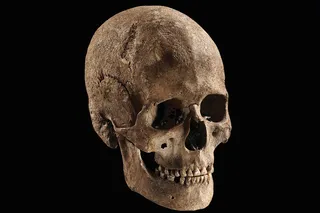
Excavators found weapons in the burned layer, including daggers and arrowheads, along with the remains of two people caught in the attack and buried under the rubble of a house. The governor’s office adds that the brain of one and the charred skin of the other survived, and it calls the skin the first of its kind found in Turkish archaeology. The ministry did not say whether the house with the dog-marked brick burned in that attack.
Read More: Ancient Boat Carvings Suggest Bronze Age Europe Was More Connected Than We Thought
What Else Has the Tavşanlı Höyük Dig Uncovered?
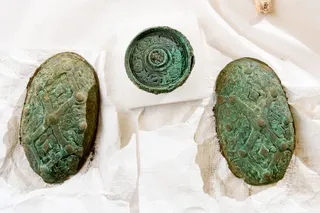
The dig has also turned up other finds, including a terracotta seal that shows traces of the Hittite Empire and of the Aegean world, hazelnuts about 4,200 years old, and idols with owl faces like those linked to Troy. A cylinder-shaped faience seal, made of a glazed ceramic, turned up in 2024, and the governor’s office links it to trade ties with lands to both the east and the west. The office adds that the dig is planned to run for at least 30 years.
The house burned, and the city was abandoned, but the dog’s steps across that brick remain, much like the tracks that make us stop on a sidewalk today.
Read More: A Fire Destroyed a Bronze Age Village — but Preserved a 3,500-Year-Old Loom
Article Sources
Our writers at Discovermagazine.com use peer-reviewed studies and high-quality sources for our articles, and our editors review for scientific accuracy and editorial standards. Review the sources used below for this article:
- This article references information from Anadolu Agency: Approximately 4,000-year-old paw prints were found during excavations at Tavşanlı Höyük.
- This article references information from the Republic of Turkey Tavşanlı District Governorship: TAVŞANLI MOUND