At more than 13,000 feet above sea level, where food is limited and the margin for error is small, three apex predators are hunting the same ground. Snow leopards, Himalayan wolves, and leopards now overlap across Nepal’s Lapchi Valley, moving through the same valleys. On paper, that kind of overlap should lead to constant conflict, but it doesn't.
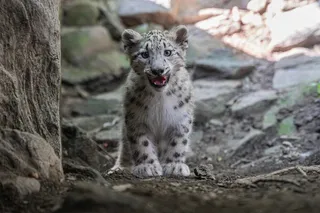
A new study, published in PLOS One, finds these predators avoid conflict not by staying apart, but by eating differently. Snow leopards focus on wild mountain prey like blue sheep and other hoofed animals. Leopards rely more heavily on livestock and animals living near humans. Himalayan wolves fall in between, feeding on both wild and domestic prey depending on what’s available. Studies like this are rare in the Central Himalaya, where researchers have had limited data on how multiple apex predators interact.
That division of prey appears to be what allows all three to survive in the same landscape. It is a pattern ecologists call niche partitioning.
Snow Leopards, Wolves, and Leopards Coexist in the Himalayas
Camera traps set up across the valley over multiple years show snow leopards and Himalayan wolves shared their range completely, with wolf activity fully nested within snow leopard territory. Leopards covered a wider area, moving from lower elevations up into alpine terrain, but still crossed into shared zones, especially between about 7,000 feet and 13,000 feet (about 2,200 and 4,000 meters).

 Explore All Options
At times, all three showed up in the same high-altitude areas above 13,000 feet (about 4,000 meters), where prey is already hard to come by. They’re also active at the same time.
All three species are mostly nocturnal. Snow leopards were active at night about 60 percent of the time, wolves more than 70 percent, and leopards around 64 percent. Their activity patterns line up closely, sometimes overlapping more than 80 percent of the time.
There are small seasonal shifts. In summer, their schedules spread out a bit. In winter, when food is harder to find, their activity overlaps even more.
Each Predator Focuses on a Different Prey
Researchers collected scat samples over several field seasons and used DNA to confirm which species each sample came from. Then they looked at what was left inside (bits of hair, bone, and other remains) to figure out what each predator had been hunting.
For snow leopards, blue sheep make up nearly half of their diet, far more than any single prey item for the other predators. Musk deer and marmots appear regularly, too, but in much smaller amounts. Livestock shows up as well, but only in a small share of their overall diet.
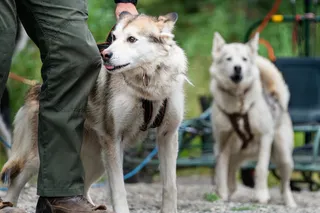
Wolves overlap the most with them. Himalayan marmots make up the largest share of their diet, followed closely by blue sheep, creating the highest dietary overlap between any two predators in the valley. But unlike snow leopards, their diet is more evenly spread across prey types, without a single dominant species.
Leopards break that pattern. Instead of keying in on the same alpine prey, they lean heavily on wild boar, which makes up more than a third of their diet and stands as the single largest prey contribution across all three predators. They also take livestock, including goats and other domestic animals, far more often than the others, pulling them into a different part of the food web.
That Separation May Be Getting Harder to Maintain
If wild prey declines, the gap between these predators could shrink quickly, pushing them toward the same food sources.
With leopards already moving higher into the mountains, that squeeze may already be underway. For people in the valley, more overlap often means more livestock losses. For now, the system seems to be working.
Read More: Wolf Reduction Helped Caribou Calves Survive — but Only in Rugged Terrain
Article Sources
Our writers at Discovermagazine.com use peer-reviewed studies and high-quality sources for our articles, and our editors review for scientific accuracy and editorial standards. Review the sources used below for this article:
- This article references information from a recent study published in PLOS One: Niche partitioning facilitates coexistence of three apex predators in the Lapchi Valley, Central Himalaya, Nepal