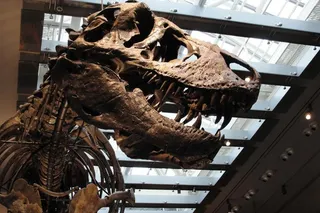
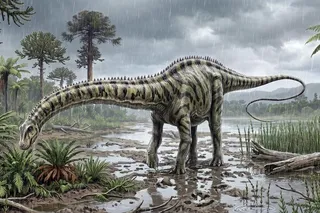
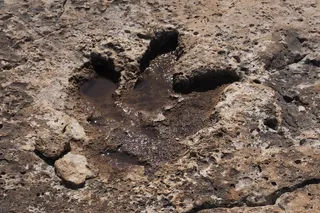
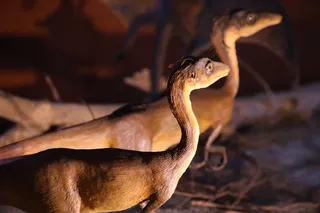
The rocks of the Ruhuhu basin in southern Tanzania hold ancient secrets. Paleontologists have dug up some of the oldest dinosaur fossils ever recorded from this area. These include fossils of Nyasasaurus, which, at 243 million years old, is thought to be the first dinosaur ever. But a discovery, and a newly identified species, has cast doubt on how old the fossils in the area really are.
The research began with a reanalysis of fossils collected during a British expedition to Tanganyika, now Tanzania. Those fossils, dug from the Ruhuhu Basin’s bone-rich Manda Beds, have sat in the Natural History Museum’s London archives ever since. But paleontologists didn’t fully analyze the fossil hoard until now.
Read More: Small Dinosaurs May Have Had an Evolutionary Advantage Over Their Enormous Relatives
Confirming Dinodontosaurus Lived Outside of South America

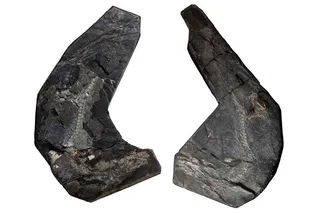
Front of Dinodontosaurus isiyavamanda cranium and the lower jaw.
(Image Courtesy of Jonathan Jackson and Hady George)
The new study published in the Journal of Vertebrate Paleontology found that the fossils included bones of an entirely new species, named Dinodontosaurus isiyavamanda. The ancient creature is named after the Wamanda people, local to the area, who helped the British archaeology team unearth the fossil in the 1960s but were never credited for their work.
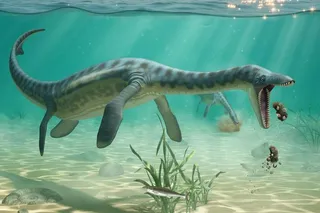
D. isiyavamanda was a member of a group called the dicynodonts. These were tusked, four-legged herbivores. Fossils from other animals closely related to D. isiyavamanda have been identified previously, but never in Tanzania.

 Explore All Options
“Our discovery marks the first confirmed record of the genus Dinodontosaurus outside South America,” said Hady George, an earth science student at the University of Bristol and co-author of the new study, in a statement.
“This helps confirm that the oldest dinosaur candidates from Tanzania are probably no older than those from South America, refining the timeline of dinosaur origins. Forthcoming research projects will examine the remaining fossil material and explore the biomechanics and ecology of Triassic dicynodonts,” George added.
Changing What We Know About Dinodontosaurus Age
The discovery doesn’t just add a new species to the fossil record. Dinodontosaurus has now been identified in both Tanzania and South America, suggesting that the rocks that the fossils came from are a similar age. New analysis of the South American rocks suggests they are millions of years younger than Triassic rocks found in South Africa, raising questions as to whether Tanzanian fossils like Nyasasaurus really are the oldest dinosaur fossils yet discovered.
The researchers now plan to analyze other Dinodontosaurus fossils from the dig, comparing them with other South American bones.
Co-author Nigel Larkin, a paleontologist at the University of Reading and co-author of the new study, said he had first come across the unidentified fossil as a student in the 1990s, but that the current analysis, which involved an international research team, was worth waiting for.
“Techniques have improved vastly over the last 30 years too — we can do so much more with Micro CT scanning etc. to examine such specimens than we ever could have imagined in the 1990s, and international collaboration is so much easier. And what’s 30 years? It’s the blink of an eye compared to the age of this prehistoric specimen,” he said in the press statement.
Read More: Swelling on an Iguanodon Shinbone May Reveal the First Known Infected Ulcer in a Dinosaur
Article Sources
Our writers at Discovermagazine.com use peer-reviewed studies and high-quality sources for our articles, and our editors review for scientific accuracy and editorial standards. Review the sources used below for this article:
- This article references information from a study published in Journal of Vertebrate Paleontology: Intercontinental evidence of the iconic genus Diplodocus Marsh, 1878 (Dinosauria, Sauropoda)