A team of archaeologists has revealed a 2,000-year-old Roman kitchen at a dig in northern Spain. The excavation also unearthed numerous ceramic fragments that hint at ancient domestic life in the region.
Researchers made the discovery at a site in the Spanish province of Burgos. For roughly a decade, archaeologists have been investigating the remains of Roman settlements that were established in the area between the 1st century B.C.E. and the 7th century A.D. Beside a modern-day church in the town of Sasamón, archaeologists have most recently been excavating the ancient Roman city of Segisamo. The project has also used techniques that require no digging, such as drone-based remote sensing and ground-penetrating radar scanning.
A Humble Kitchen

Fragments found at the dig site.
(Image Courtesy of the USAL and IAM-CSIC research team/ José Manuel Costa-García)
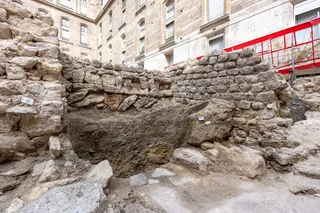
The excavation campaign recently revealed a room that appears to have been a working kitchen nearly two millennia ago.
“It has been badly damaged by later looting, but it is still possible to recognize the remains of a clearly functional space, a possible oven, and numerous materials related to food preparation,” said project co-lead José Manuel Costa-García, an archaeologist at the University of Salamanca, in a translated statement.
Built on a layer of clay and pebbles, the structure had mudbrick walls with stone foundations. Unlike the grand palaces and complex mosaics often depicted in artists’ portrayals of ancient Roman life, this was a simple, domestic dwelling.

 Explore All Options
“We have a somewhat idealized image of Roman cities as monumental spaces, but we rarely find mosaics and painted walls in domestic and productive spaces,” Costa-García said.
A small step within the room likely marked the start of an elevated area which would have held a kiln. A thick layer of ash and charcoal surrounded this area.
Read More: 120 Ancient Inscriptions Suggest Roman Women Gathered Deep Underground to Worship 'the Lady'
What Researchers Found in the Ancient Kitchen

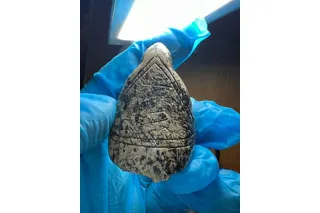
Pieces of jewelry like beads, necklaces, and bracelets.
(Image Courtesy of the USAL and IAM-CSIC research team/ José Manuel Costa-García)
Recovered fragments from the dig support the idea that the excavated room was a kitchen. These include shards of tableware and cookware.
“We have documented large containers for food storage (dolia), as well as jugs, bowls, and other utensils for food processing, such as mortars,” said project co-lead Jesús García Sánchez, a researcher at the Institute of Archaeology in Mérida, Spain, in the translated statement.
Other remnants include pieces of pans with non-stick coatings and what appears to be the remains of a portable oven for baking bread called a clibanus.
The fragments appear to be a mix of materials, with some manufactured locally and others imported from Italy.
Who Likely Used the Kitchen

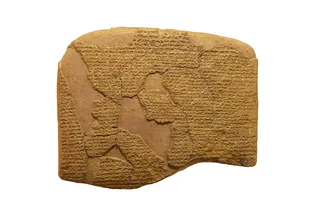
Pieces of ceramics found in the Roman kitchen.
(Image Courtesy of the USAL and IAM-CSIC research team/ José Manuel Costa-García)
The researchers speculated that Segisamo’s inhabitants were likely a mix of foreigners from Italy following important Roman customs, and locals following the traditional ways of the Turmoga people. The kitchen features influences from both cultures.
“A little bit of the new; a little bit of the old,” said Sánchez and Costa-García.
The experts' next step is to dig even deeper: they believe that Segisamo wasn’t the first settlement in the area. Some of the area surveys appear to show buildings with features of Iron Age settlements, which began in Europe roughly 3,000 years ago. Digging further into these ancient settlements will hopefully reveal more of the area’s rich past.
Read More: Illegal Excavation Near Rome Uncovers Villa Linked to the Antonine Age
Article Sources
Our writers at Discovermagazine.com use peer-reviewed studies and high-quality sources for our articles, and our editors review for scientific accuracy and editorial standards. Review the sources used below for this article:
- This article references information from the University of Salamanca and the Institute of Archaeology of Mérida IAM-CSIC-Junta de Extremadura